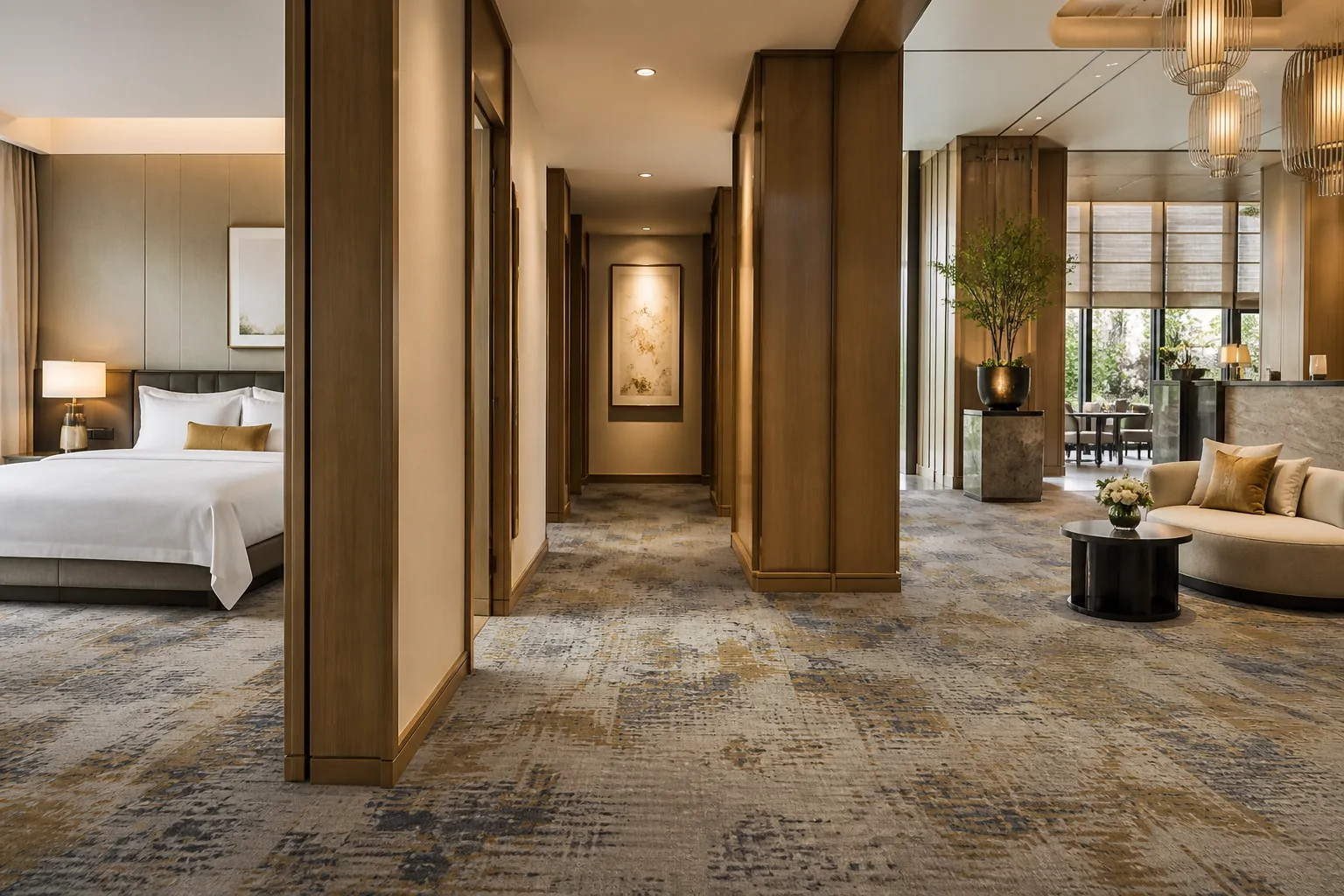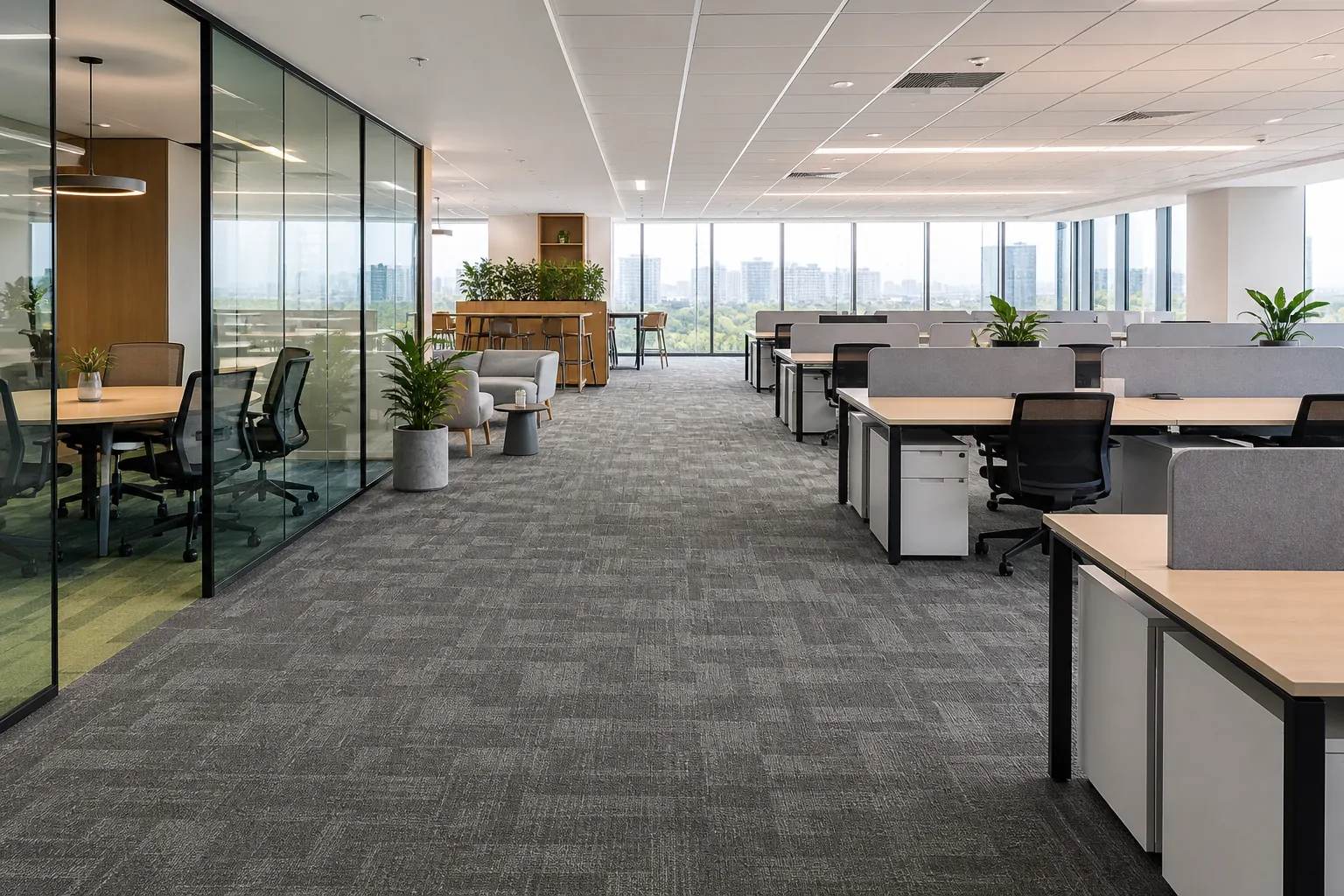
Commercial Carpet for High-Traffic Areas
A commercial carpet in a busy building faces demands that are very different from a low-traffic private space. Constant foot traffic, rolling chairs and carts, frequent cleaning, visible wear paths, and future repair planning all affect the selection. Whether the project uses broadloom or commercial carpet tiles, a high traffic carpet should be compared by its full construction and intended application. This guide helps Southeast Asia buyers evaluate commercial flooring for offices, hotels, schools, healthcare administration, retail, banks, and public buildings without relying on one specification alone.
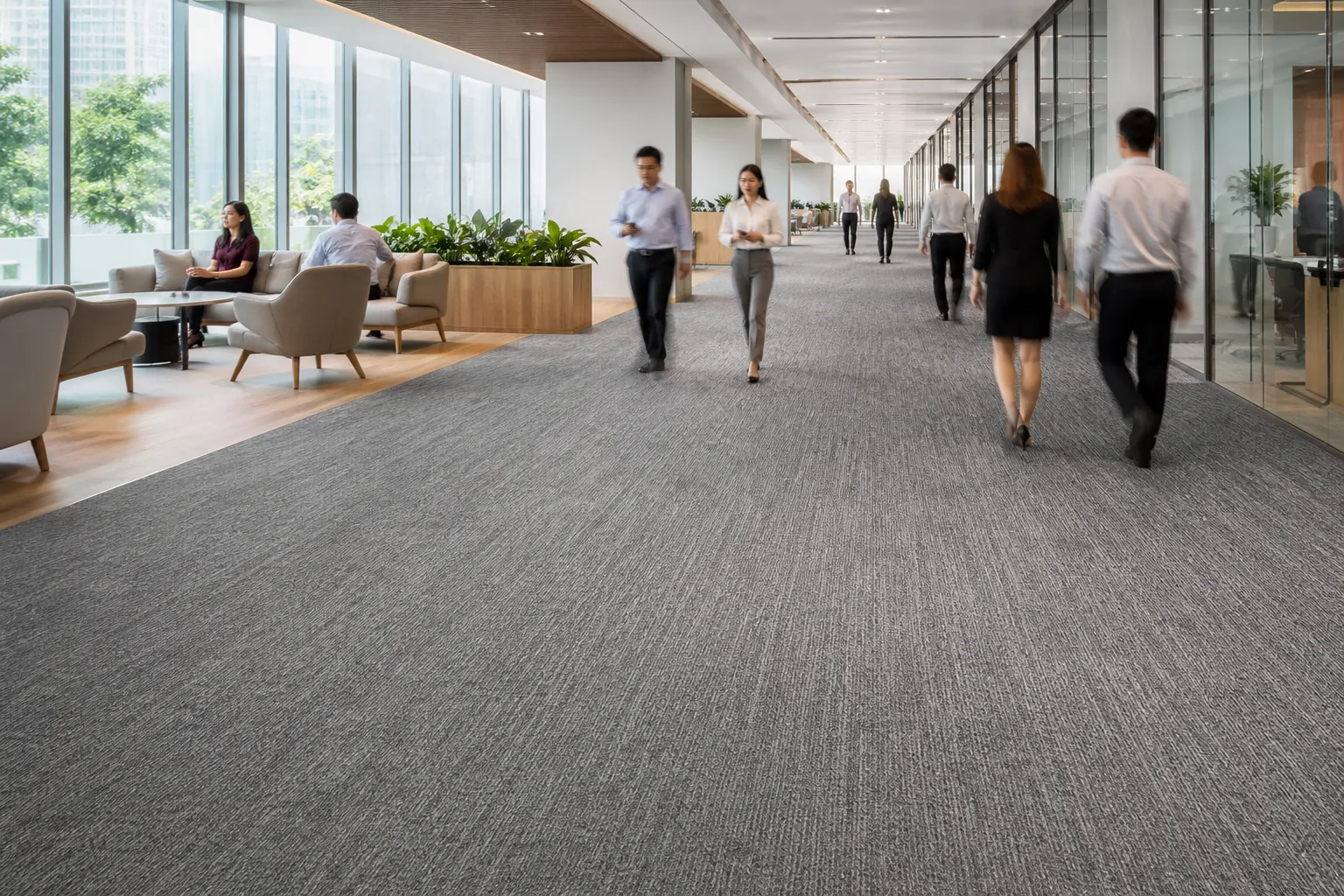
Commercial Carpet Guide Contents
- High-traffic areas and product construction
- Fiber, pile, density, backing, and maintenance
- Carpet tiles compared with broadloom
- Project applications, specifications, and supplier questions
What Is a High-Traffic Commercial Area?
A high-traffic area is not defined by one universal number. It is a space where people, wheels, equipment, or cleaning activity repeatedly follow the same routes. Office corridors, reception areas, hotel hallways, education buildings, banks, retail stores, conference centers, government buildings, and public circulation zones can all have different traffic patterns. A project team should map entry points, turns, lift lobbies, workstations, service routes, and cleaning access before deciding what high traffic means for that specific area.
What Makes a Commercial Carpet Suitable for High Traffic?
A suitable commercial carpet is assessed as a system. Fiber resilience, pile construction, pile height, face weight, density, backing, installation quality, and maintenance all contribute to the result. Looking at only one value can lead to a poor comparison. For example, a thicker product is not automatically more appropriate for rolling traffic, and a heavier product is not automatically more durable. The intended application, expected use, and service plan should guide the specification.
- Fiber: Consider resilience, stain exposure, cleaning, and the product construction.
- Pile and density: Review them together with face weight and the desired texture.
- Backing: Match it to the subfloor, installation system, and replacement strategy.
- Maintenance: Confirm how entrance dirt, vacuuming, spot cleaning, and traffic routes will be managed.
Carpet Fiber for High-Traffic Areas
Nylon
Nylon is commonly considered where resilience and appearance retention are important for a busy commercial project. Its suitability still depends on the full product construction, maintenance routine, and application area.
Polypropylene or Olefin
Polypropylene or olefin can be assessed against project budget, stain exposure, cleaning conditions, and the specific construction proposed. It should be compared against the real operating conditions rather than selected by fiber name alone.
Solution-Dyed Options
Solution-dyed options may be relevant where color consistency and maintenance considerations are part of the brief. Buyers should review samples and available product documents with the supplier. Read nylon vs polypropylene commercial carpet for a practical comparison framework.
Why Low Pile Commercial Carpet Is Common
A low pile commercial carpet is often considered in busy spaces because it can support easier chair and cart movement, routine cleaning, door clearances, and transitions between surfaces. These practical advantages do not mean a lower pile is always more durable than every higher-pile option. Pile height must be reviewed with fiber, density, face weight, construction, backing, and the expected use of the space.
Commercial Carpet Tiles for High-Traffic Areas
Commercial carpet tiles, including high traffic carpet tiles and heavy duty carpet tiles, are often considered because their modular format can simplify local replacement and maintenance planning. If a section is damaged or heavily soiled, a project may be able to plan a targeted module replacement rather than a full-area intervention. Carpet tiles can also support flexible layouts, planned spare stock, office reconfiguration, and access to selected floor systems. Their performance still depends on the product specification, backing, substrate preparation, installation, and maintenance.
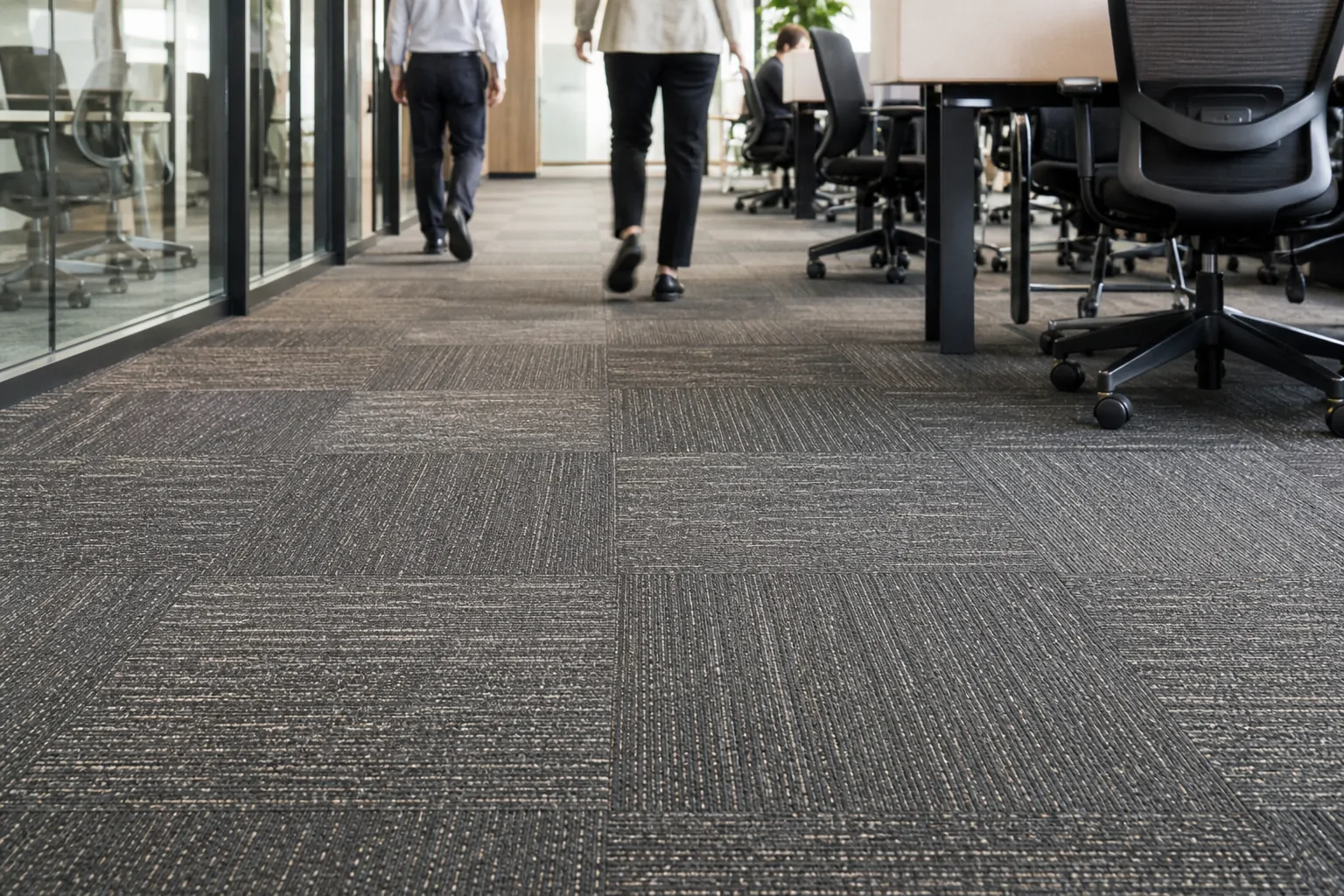
Review commercial carpet tiles and carpet tile backing types before aligning samples with your installation plan.
Carpet Tiles vs Broadloom for High-Traffic Areas
| Factor | Carpet Tiles | Broadloom Carpet |
|---|---|---|
| Local replacement | Individual modules can support targeted replacement planning | Requires planned repair areas and matching spare material |
| Visual continuity | Modular pattern and layout effect | Continuous visual effect over larger runs |
| Maintenance planning | Plan spare tiles and module direction | Plan spare material, seams, and repair methods |
| Installation | Requires substrate preparation and layout control | Requires roll planning, seam coordination, and access |
| Pattern options | Modular patterns and zoning layouts | Continuous patterns and larger-scale design effects |
| Spare material planning | Approved spare modules can be stored for later use | Approved spare rolls or cuts should be planned early |
| Typical commercial applications | Offices and spaces prioritizing modular maintenance | Projects prioritizing continuous visual design |
Neither format is automatically better. The right choice depends on visual design, traffic routes, maintenance process, installation conditions, and replacement strategy.
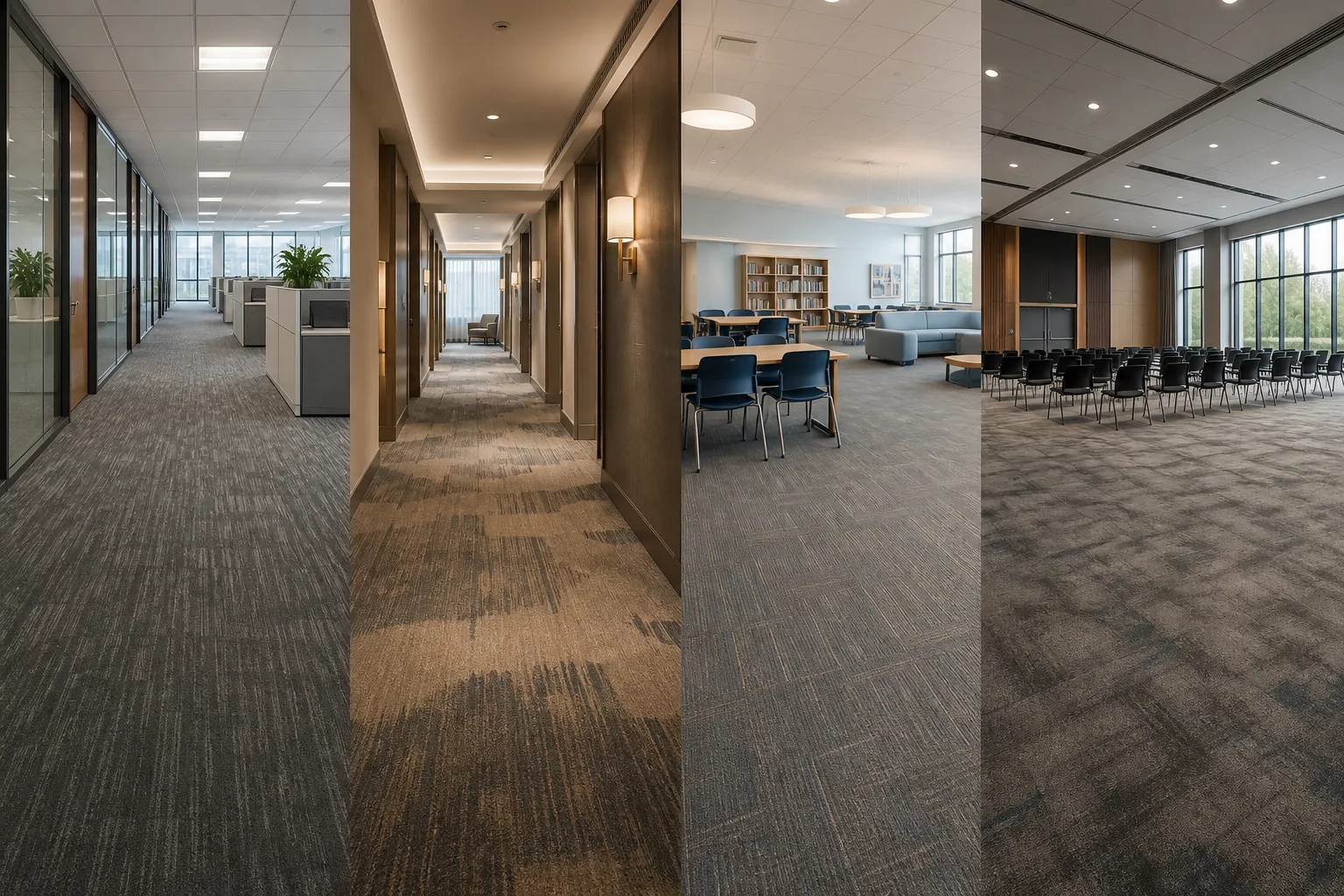
High-Traffic Carpet for Different Commercial Spaces
Offices
Office corridors, reception areas, open offices, meeting rooms, and chair-caster zones have different demands. Modular carpet tiles are often evaluated where layout changes and local replacement are important. See carpet tiles for office projects for more context.
Hotels
Hotel corridors combine guest traffic, luggage wheels, housekeeping carts, long sightlines, and a visible design standard. Pattern direction, backing, cleaning access, and spare material all need early discussion.
Education
Education buildings can have concentrated student circulation in corridors, classrooms, libraries, and shared spaces. Product comparisons should reflect traffic peaks, cleaning schedules, and the project’s maintenance resources.
Healthcare Facilities
Public waiting areas, medical offices, and administration areas may have wheel traffic and particular cleaning requirements. A standard commercial carpet should never be assumed to meet healthcare rules without confirming the specific project requirements and approvals.
Retail, Banks and Public Buildings
Constant visitor movement, entrance dirt, visual appearance, cleaning, and future replacement planning all need to be addressed. The busiest routes may need a different solution from lower-traffic meeting or administration areas.
Does Heavier Carpet Mean More Durable Carpet?
Not necessarily. Total carpet weight can include backing and other construction elements, while wear expectations also depend on fiber, pile height, face weight, density, construction, backing, intended application, installation, and maintenance. Buyers should ask for a complete specification rather than treating a single weight number as a durability rating. Use the commercial carpet pile height, density and weight guide to make comparisons more consistent.
Maintenance Matters as Much as Product Selection
A durable commercial carpet still needs a practical maintenance plan. Entrance dirt control, vacuuming frequency, spot cleaning, furniture movement, traffic patterns, and periodic inspection influence everyday appearance. Plan approved spare materials before installation, including the relevant module direction for carpet tiles. A clear replacement process helps a facility manager respond to local damage without making an unplanned specification change.
Specifications Buyers Should Check
- Fiber type and construction
- Pile height, face weight, density, total thickness, and total weight
- Backing type and tile or roll size
- Installation method and recommended application
- Available test reports and product documents
- Physical samples, custom color or pattern options, and spare material planning
There is no fixed best value for every heavy duty carpet project. Ask the supplier to explain how the proposed specification fits the intended traffic, application, installation, and maintenance plan. A commercial carpet specification sheet can help compare supplier proposals on the same basis.
Common Mistakes When Choosing High-Traffic Carpet
- Choosing only by price.
- Assuming heavier carpet is always better.
- Choosing only by pile height.
- Ignoring fiber type.
- Ignoring backing and subfloor conditions.
- Ignoring actual traffic patterns.
- Not planning spare material.
- Ignoring maintenance requirements.
- Not requesting physical samples.
- Using the same carpet specification for every area.
Questions to Ask a Commercial Carpet Supplier
- Is this carpet intended for high-traffic commercial areas?
- What fiber and construction are used?
- What are the pile height, face weight, density, and backing options?
- Would carpet tile or broadloom better match this project?
- What maintenance is recommended?
- Are physical samples and test reports available?
- Can colors and patterns be customized?
- What are the MOQ, production lead time, and export packing options?
How Melozon Supports High-Traffic Commercial Projects
Melozon supports commercial carpet selection with carpet tile and broadloom comparisons, fiber and backing discussions, product specification communication, custom colors and patterns, standard and custom samples, OEM or ODM conversations, bulk commercial quotations, and export packing and shipping coordination. Explore commercial carpet products to compare suitable formats for your project.
Request Commercial Carpet Samples for Your Project
Send Melozon your project type, application area, expected traffic level, estimated quantity, preferred specifications, and destination to discuss suitable commercial carpet options and request samples. Request carpet samples and a quote.
Commercial Carpet FAQ
What type of carpet is best for high-traffic commercial areas?
The suitable choice depends on the actual traffic route, fiber, construction, pile height, density, backing, installation, and maintenance plan.
Are carpet tiles suitable for high-traffic areas?
They can be suitable where modular replacement, maintenance planning, and the selected product specification fit the project requirements.
What makes commercial carpet durable?
Durability is affected by fiber, construction, pile, density, backing, installation, traffic, and maintenance, not by one figure alone.
Is low pile commercial carpet better for high traffic?
Low pile can offer practical benefits for movement and cleaning, but the complete construction and use conditions determine whether it is suitable.
Does heavier carpet mean better durability?
No. Weight should be interpreted with fiber, pile, density, backing, construction, intended use, installation, and maintenance.
What carpet is suitable for office corridors?
Compare corridor traffic, rolling chairs, cleaning, design, backing, and replacement planning before selecting a product.
Are commercial carpet tiles suitable for public buildings?
They may be considered when the selected product, application area, installation, and maintenance process meet the project requirements.
What should I check when choosing high traffic carpet?
Check fiber, construction, pile height, face weight, density, backing, cleaning, installation, samples, and spare material planning.
What is heavy duty carpet?
Heavy duty carpet is commonly used to describe products considered for demanding commercial use, but buyers should review the actual specification and intended application.
Should I request carpet samples before placing a commercial order?
Yes. Samples help project teams review texture, color, pattern, backing, construction, and suitability before approving a commercial order.