How to Read a Commercial Carpet Specification Sheet
A carpet specification sheet helps commercial buyers compare products beyond color and price per square meter. A clear carpet specification sheet also gives procurement teams a shared reference when samples, quotations, and approvals are reviewed. It records construction, fiber, carpet pile height, weight, backing, dimensions, installation information, and other details that affect a project decision.
Different manufacturers may present the information in different layouts. The useful comparison is between equivalent specifications, not between documents that simply look more complete. This guide explains what each common field means and what importers, contractors, designers, and project buyers should confirm before ordering.

What Is a Carpet Specification Sheet?
A commercial carpet specification sheet is a technical summary of a product. It may identify the product format, construction, fiber or yarn, dyeing method, pile height, surface weight, total weight, thickness, gauge, stitch rate, density, backing, tile size, color, pattern, and installation method.
The document is useful at several stages. A designer can compare appearance and format. When you receive a carpet specification sheet, check the product identity and revision before comparing technical fields. A contractor can review installation and floor transitions. A procurement team can align samples, quantities, packaging, and project requirements. A commercial carpet manufacturer can also use the sheet to confirm which product configuration a quotation refers to.
Always confirm the document revision, product name, measurement units, and whether the data applies to a standard or custom construction. A specification sheet should support a decision, not replace a sample or project review.
Key Carpet Specifications Explained
The following fields appear frequently on a commercial carpet specification sheet. Each field answers a different question, so one number should not be used as a shortcut for overall quality.
- Product type: identifies carpet tile, broadloom, or another format.
- Carpet construction: describes how the surface is made, such as loop or cut pile.
- Fiber or yarn: may identify nylon, polypropylene, or another specified material.
- Dyeing method: explains how color is added and may affect color consistency and maintenance considerations.
- Carpet pile height: measures the height of the visible surface pile.
- Surface or pile weight: indicates the weight of specified surface fiber within a defined area.
- Total carpet weight: may include backing and other layers, depending on the supplier’s definition.
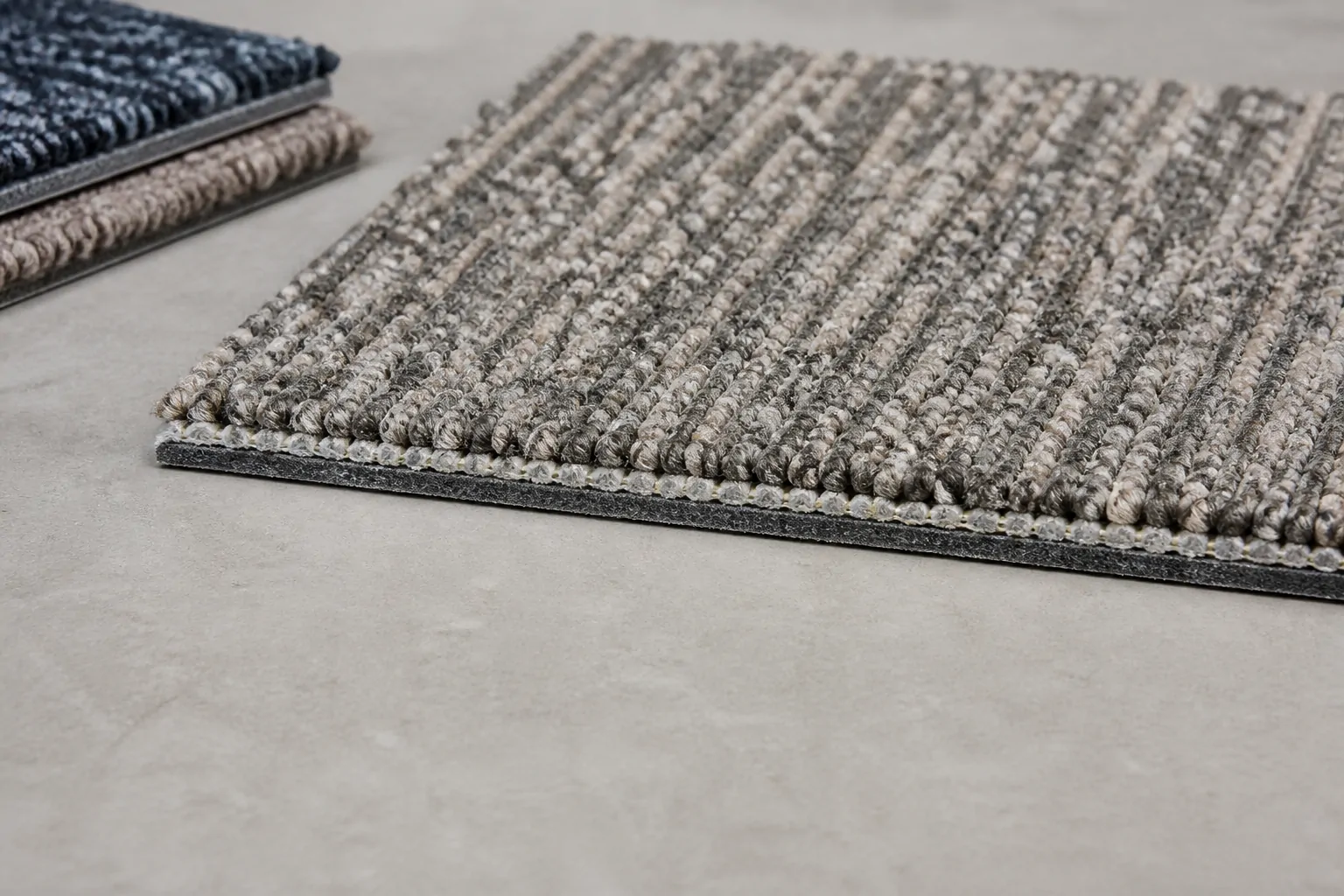
- Total thickness: covers the combined height of the carpet system.
- Gauge and stitch rate: describe elements of yarn placement and construction.
- Density: relates to how closely the surface material is arranged.
- Carpet tile size: confirms the module used for layout, quantity, and replacement planning.
- Backing type: identifies the layer supporting dimensional stability and installation.
- Color and pattern: should be checked against a physical sample under project lighting.
- Installation method: indicates how the product should be installed and what subfloor preparation may be needed.
How to Read Carpet Pile Height
Carpet pile height is the height of the visible yarn or surface pile. A low pile may support a flatter appearance and easier movement across transitions. A higher pile can change underfoot feel and visual texture. These are general concepts, not automatic performance rankings.
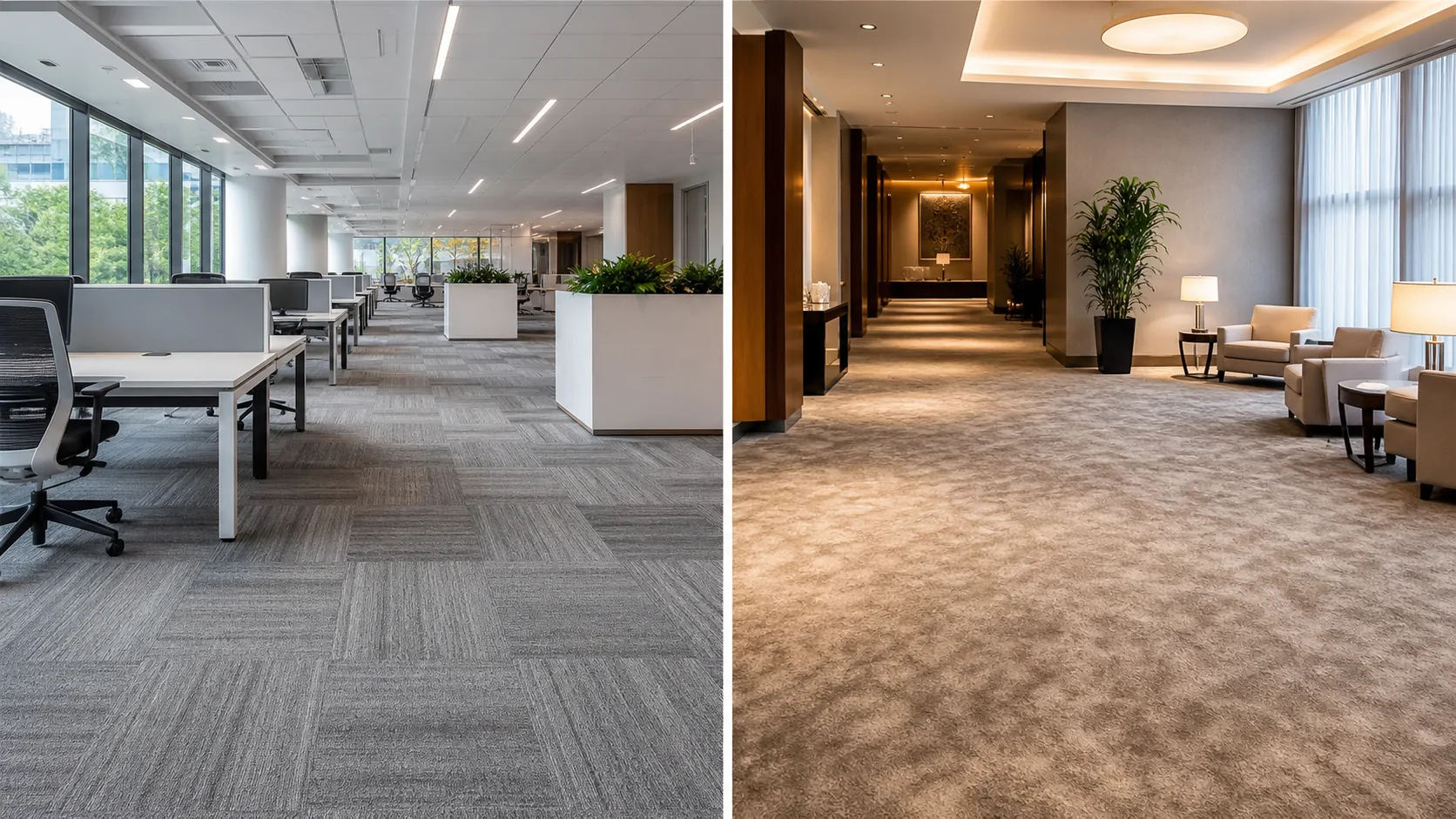
For offices, hotels, schools, healthcare facilities, and public buildings, compare pile height with fiber, density, construction, surface weight, backing, and cleaning requirements. Door clearance, thresholds, ramps, and floor transitions also need attention. A specification that works in a hotel room may not be the right choice for a busy corridor or a rolling-chair zone.
Ask the supplier whether the listed height is measured from the backing or another reference point. Confirm the measurement method when comparing sheets from different sources.
Pile Weight vs Total Weight
Pile weight usually refers to the weight of the surface fiber within a stated area. Total weight may include the backing and other construction layers. The two values should not be treated as interchangeable.
When comparing products, use the same units, area basis, and definitions. A heavier total carpet is not automatically more durable. Backing composition, density, installation, traffic, and maintenance can be equally important. Ask the supplier exactly what each listed weight includes before using it in a tender comparison.
Understanding Gauge, Stitches, and Density
Gauge and stitch rate are construction terms connected to yarn placement and surface structure. Density describes how closely the surface material is arranged. These fields can help a technical buyer understand how a product is built, but they should not be read in isolation.
Products with different constructions may not be fairly compared through one shared number. Review the full specification, inspect the sample, and ask how the construction is intended to perform in the proposed application. A commercial carpet tile manufacturer should be able to explain the product definition used on its sheet.
Understanding Carpet Tile Backing
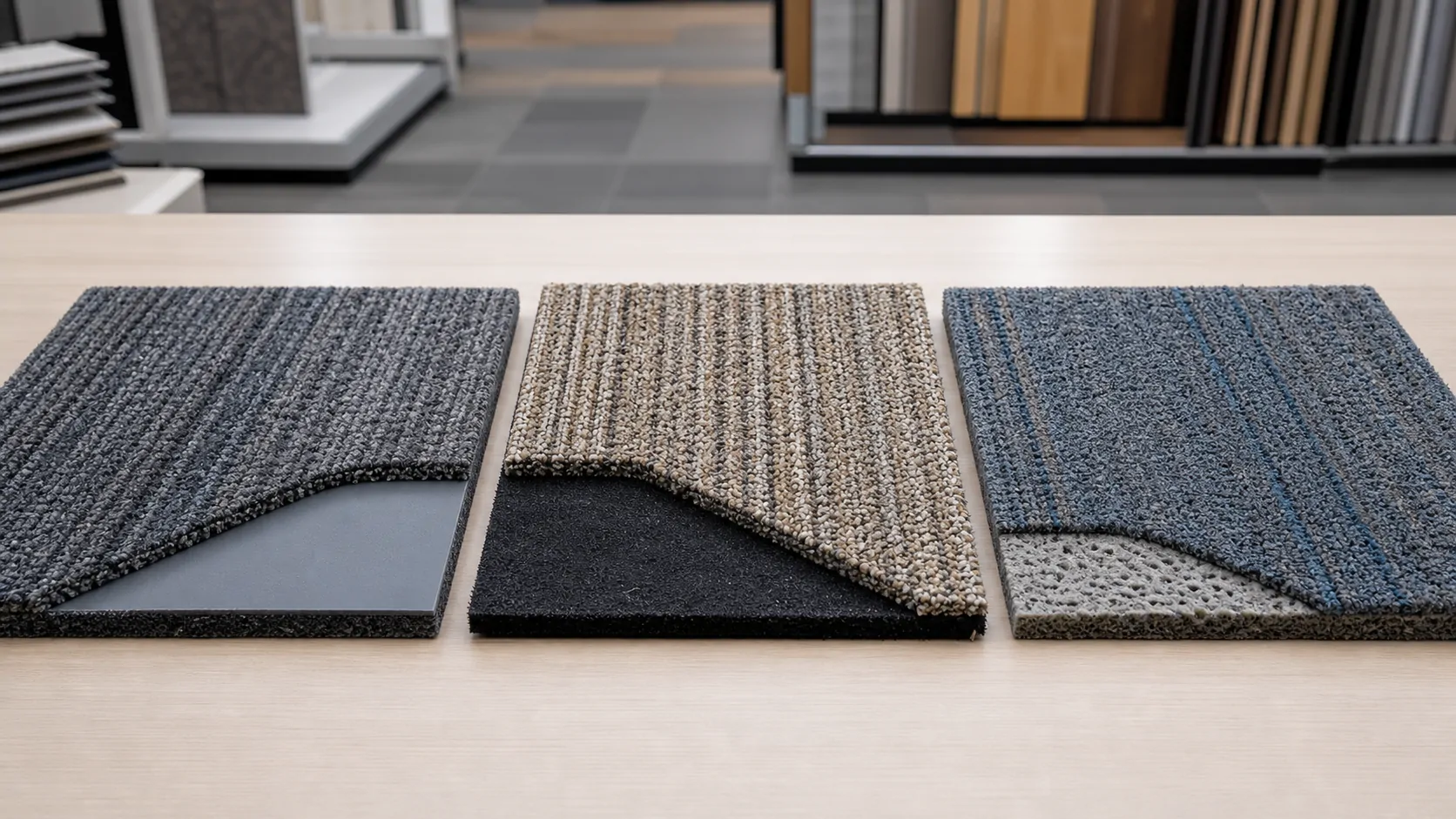
Backing can influence dimensional stability, tile weight, installation, underfoot comfort, transportation, and floor transitions. A carpet specification sheet should identify the backing clearly enough for the contractor to confirm installation and transition requirements. Common commercial options may include PVC backing, bitumen backing, or cushion backing. The correct choice depends on the subfloor, installation method, traffic, moisture conditions, and project requirements.
Read the backing field together with total thickness and tile size. These details affect door clearance, cutting, layout, packaging, and replacement stock. For a focused explanation, review Melozon’s guide to carpet tile backing types.
Fiber and Dyeing Method
Fiber selection should reflect traffic level, cleaning requirements, stain exposure, appearance expectations, and project budget. Nylon and polypropylene, also called olefin, may be used in commercial carpet products. Solution-dyed fiber may be considered where color consistency and cleaning considerations are important.
Do not assume that one fiber is better in every project. Compare the construction, pile, backing, and maintenance instructions. Buyers can also review Melozon’s nylon vs polypropylene commercial carpet comparison before asking for samples.
Performance and Test Information
A specification sheet may list fire performance, colorfastness, static control, dimensional stability, acoustic information, castor-chair suitability, commercial-use classification, or available test reports. For additional context, buyers can review the Carpet and Rug Institute research and resources when preparing a commercial carpet brief. The exact fields vary by product and supplier.
Do not assume that every product has every test or that one document applies to every color, backing, or construction. Ask which product version was tested, what the report covers, and whether the document is available for project or tender review. Requirements can also vary by country, building type, and procurement brief.
How to Compare Two Carpet Specification Sheets
Use a comparison table with the same fields and units for both products. The most reliable carpet specification sheet comparison keeps product definitions, units, samples, and intended applications aligned. This makes missing information visible and prevents a low price or a single attractive number from controlling the decision.
| Specification | Product A | Product B | Questions to Ask |
|---|---|---|---|
| Product format | Tile or broadloom | Tile or broadloom | Are the formats being compared equivalent? |
| Construction | Listed construction | Listed construction | Do the products use comparable construction? |
| Fiber | Specified fiber | Specified fiber | Is the fiber suitable for the traffic and cleaning plan? |
| Dyeing method | Listed method | Listed method | How is color consistency managed? |
| Pile height | Value and unit | Value and unit | Are the measurement definitions the same? |
| Pile weight | Value and area basis | Value and area basis | What does the listed weight include? |
| Total thickness | Value and unit | Value and unit | Will transitions and door clearance work? |
| Total weight | Value and definition | Value and definition | Does the value include backing? |
| Gauge and density | Listed construction data | Listed construction data | Can the supplier explain the difference? |
| Backing | Backing type | Backing type | Does it match the subfloor and installation? |
| Tile or roll size | Product dimension | Product dimension | How will layout and replacement be planned? |
| Installation method | Recommended method | Recommended method | What preparation and accessories are needed? |
| Available test reports | Listed documents | Listed documents | Which product version does each report cover? |
| Recommended application | Suggested use | Suggested use | Does it match the actual project zone? |
Specifications for Different Commercial Applications
Office Buildings
Review traffic level, rolling-chair use, acoustic comfort, modular replacement, raised-floor access, and the cleaning plan. Open offices and corridors may need different construction or replacement strategies.
Education Facilities
Focus on corridor traffic, cleaning frequency, color zoning, classroom use, and replacement planning. A tile format may help with localized replacement, subject to the selected backing and installation.
Hotels and Conference Centers
Compare appearance, comfort, pattern, corridor traffic, acoustic requirements, and cleaning access. Guest rooms, public corridors, meeting areas, and service spaces may use different specifications.
Healthcare Facilities
Review cleaning requirements, wheeled traffic, facility standards, and available product documentation. Do not state that a general commercial carpet automatically meets a healthcare standard without project-specific evidence.
Retail, Banks, and Public Buildings
Consider heavy circulation, entrance dirt, appearance retention, maintenance frequency, and replacement stock. Public projects may also require clearer document control and tender-ready information.
Common Mistakes When Reading a Specification Sheet
- Comparing only carpet pile height.
- Confusing pile weight with total weight.
- Ignoring the backing type.
- Comparing specifications in different units.
- Assuming a heavier carpet is always better.
- Ignoring the installation method.
- Not requesting a physical sample.
- Assuming all test reports apply to every product.
- Comparing products with different constructions.
- Choosing only by price.
Questions to Ask a Carpet Tile Supplier
- What carpet construction is used?
- What fiber is used?
- Is the fiber solution-dyed?
- What does the listed pile weight include?
- What backing is used?
- What is the total tile thickness?
- Which application is the product designed for?
- Which test reports are available?
- Is a physical sample available?
- What installation method is recommended?
- What is the MOQ?
- What is the production lead time?
How Melozon Supports Commercial Carpet Buyers
Melozon can help buyers explain product specifications, compare commercial carpet options, review samples, discuss fiber and backing options, confirm custom requirements, prepare commercial quotations, coordinate bulk production, and support export packing and shipping.
For installation planning, buyers can also review the CRI commercial carpet installation standards. Review the commercial carpet tiles range and broader commercial carpet product range before preparing a project brief. Buyers can also use Melozon’s commercial carpet buying checklist to organize quantities, application areas, samples, and approval details.
Frequently Asked Questions
What information is included in a carpet specification sheet?
A carpet specification sheet may include product format, construction, fiber, dyeing method, pile height, pile weight, total weight, thickness, density, backing, dimensions, installation, and available performance documents.
What does carpet pile height mean?
Carpet pile height is the height of the visible surface pile. Review it with construction, density, fiber, backing, transitions, and cleaning needs.
Is a higher pile carpet better?
Not automatically. The appropriate pile depends on the application, appearance, traffic, maintenance, transitions, and complete product construction.
What is the difference between pile weight and total weight?
Pile weight generally refers to surface fiber within a defined area. Total weight may include backing and other layers. Confirm the supplier’s definitions and units.
What does carpet gauge mean?
Gauge is a construction term related to the spacing of yarn placement. It should be compared with the full construction and density, not alone.
How do I compare two commercial carpet specifications?
Place equivalent fields in one table, normalize units, review samples, confirm definitions, and check the product against the actual traffic and installation plan.
Why is carpet tile backing important?
Backing can affect dimensional stability, weight, installation, comfort, transportation, and floor transitions. It should match the project conditions.
What specifications are important for high-traffic commercial areas?
Review construction, fiber, pile, density, backing, installation, cleaning, rolling traffic, and available application or test information.
Should I request carpet test reports?
Ask which reports are available and which exact product, color, backing, and construction they cover. Requirements vary by project and location.
Should I approve a sample before placing a bulk order?
Yes. Review a physical sample for color, texture, construction, dimensions, and suitability under the project’s lighting and intended use.
Request a Carpet Specification Sheet and Samples
Send Melozon your project type, application area, estimated quantity, required specifications, destination, and delivery schedule through the commercial carpet inquiry page to request suitable product specifications, samples, and a commercial quotation.