Carpet Tiles vs Broadloom Carpet: Which Is Better for Commercial Projects?
Carpet tiles and broadloom carpet can both work well in commercial interiors, but they solve different project problems. A carpet tiles supplier may recommend a modular system for flexible office areas, while broadloom can suit spaces where a continuous wall-to-wall finish is the design priority. The best choice is rarely decided by a single commercial carpet price or a product photograph.
Before asking for a commercial carpet quote, buyers should compare format, installation conditions, maintenance planning, replacement needs, packaging, shipping, and the visual effect required at the site. This carpet tiles vs broadloom carpet guide helps importers, contractors, designers, hotel teams, and project buyers choose a practical direction for commercial projects in Southeast Asia.
What Are Carpet Tiles?
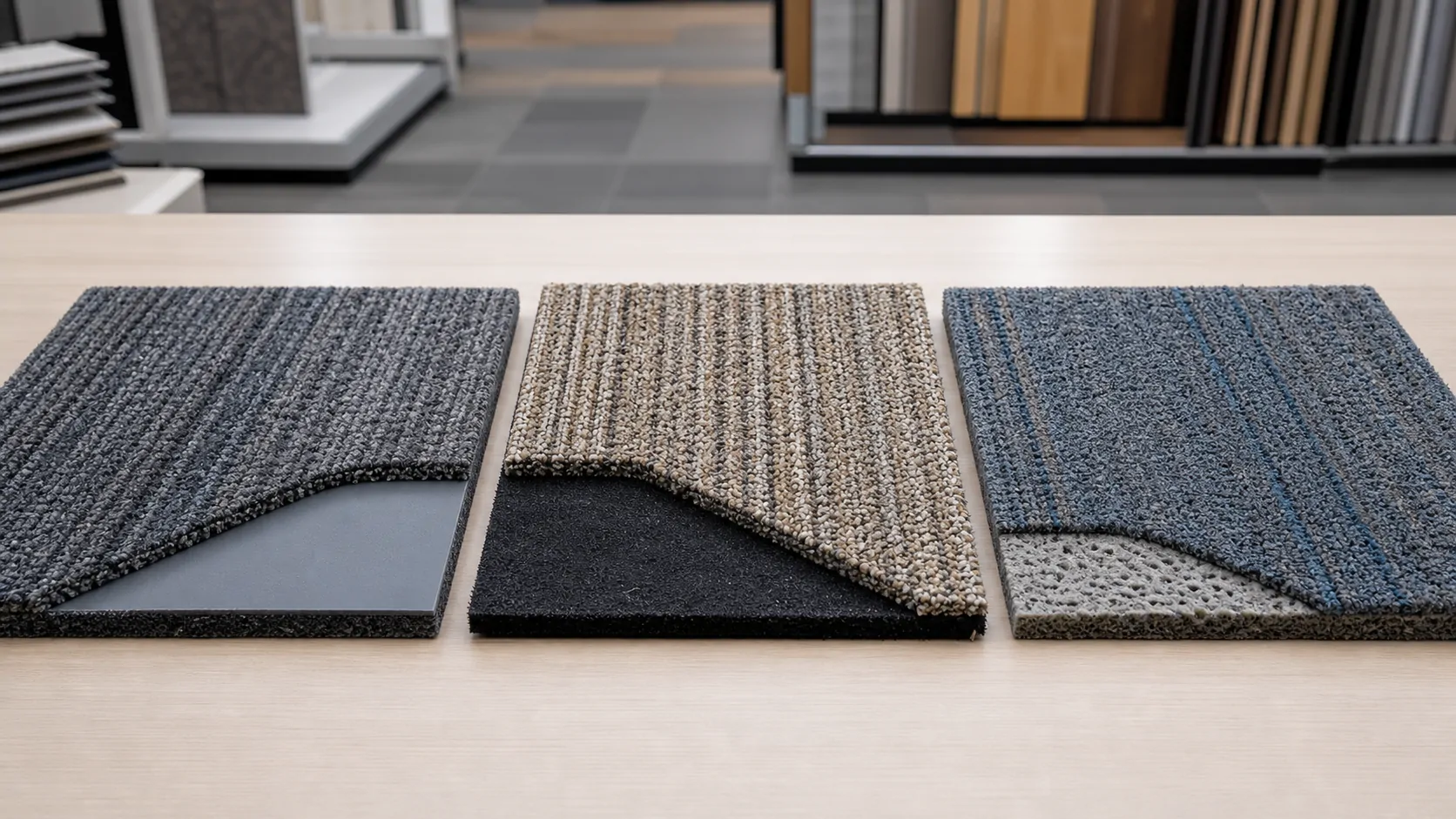
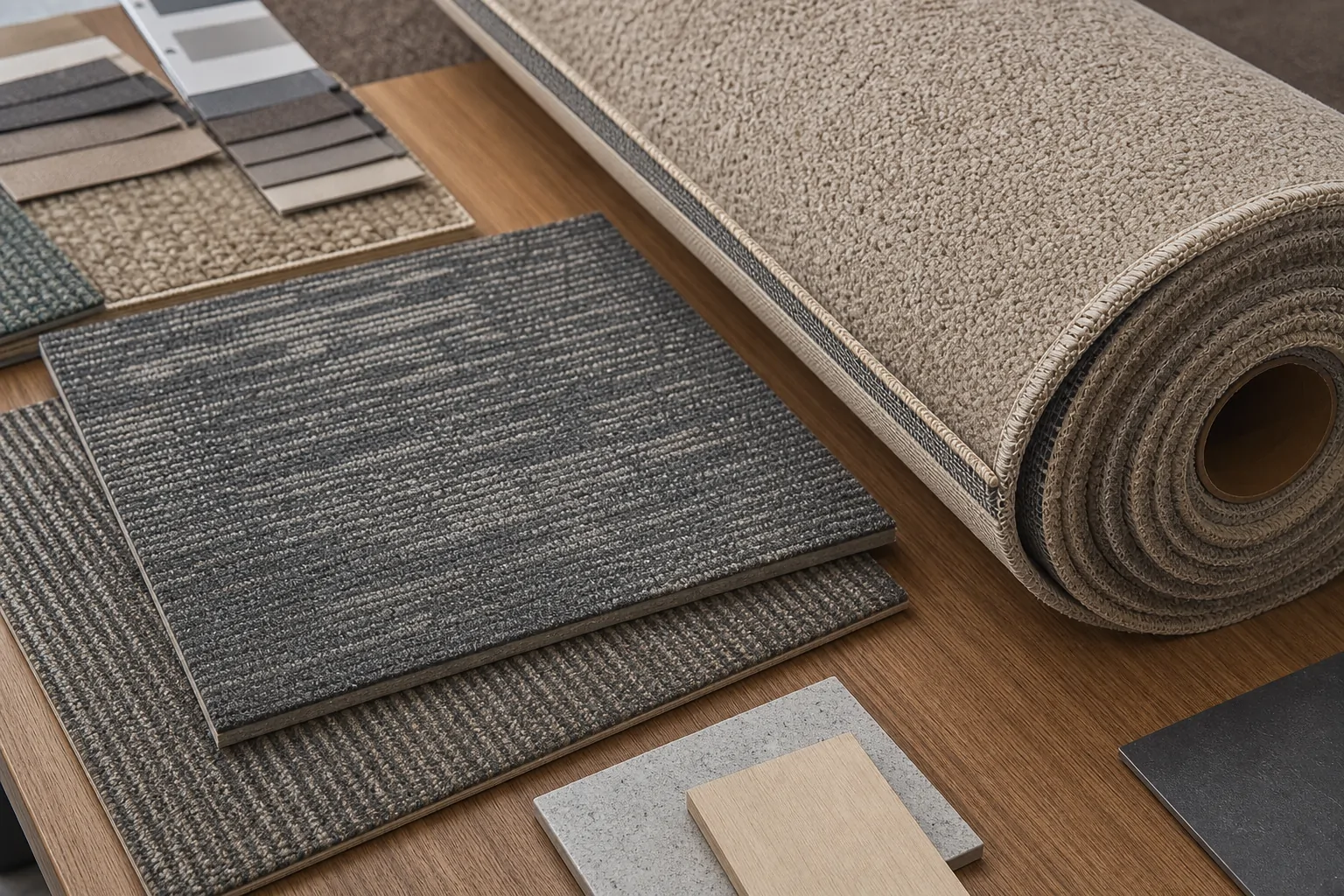
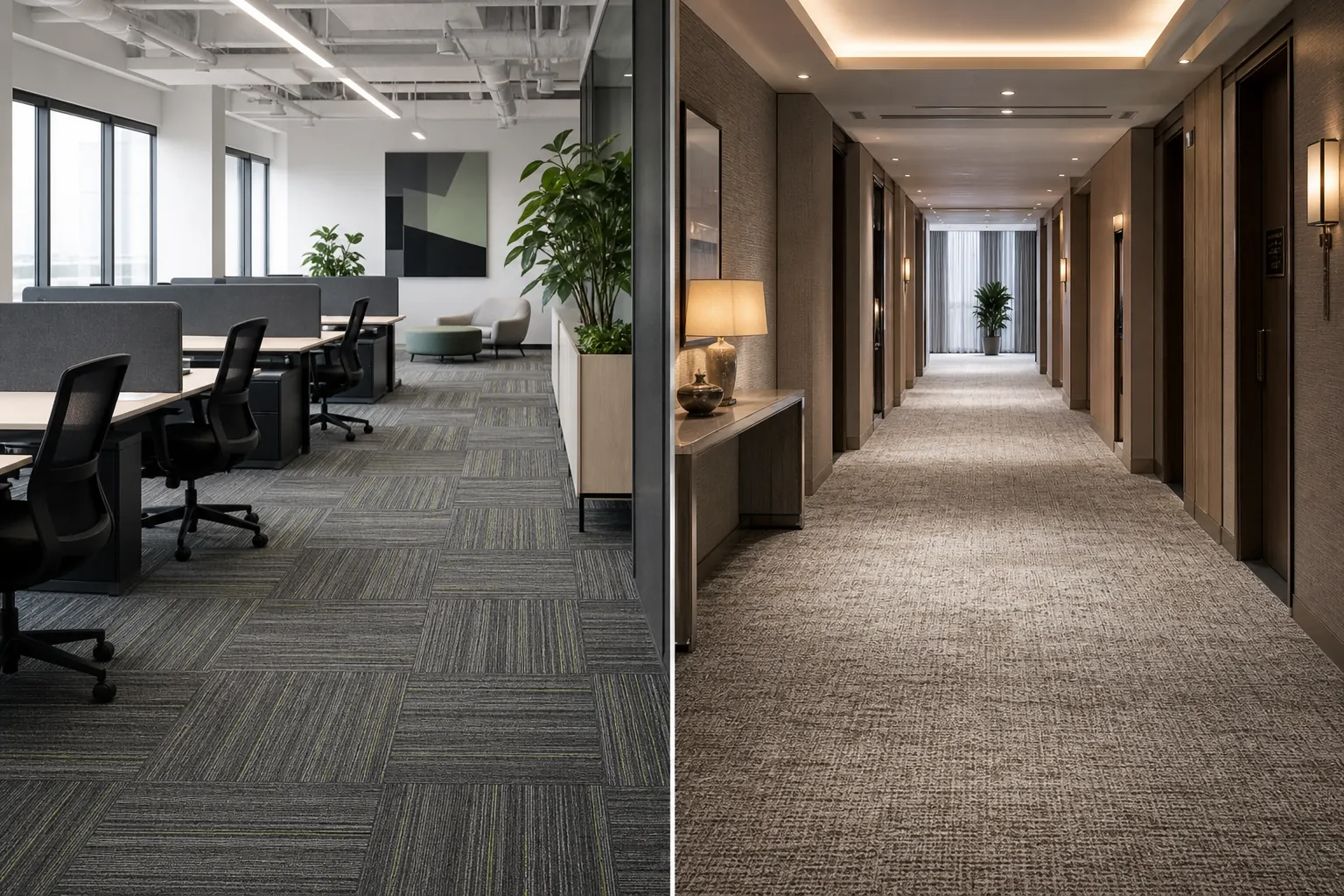
Carpet tiles are modular carpet units that are installed in a planned layout. They are commonly considered for offices, meeting rooms, corridors, education spaces, and other areas where future access or local replacement may matter. A tile format can also support colour zoning, directional patterns, and phased installation across a larger project.
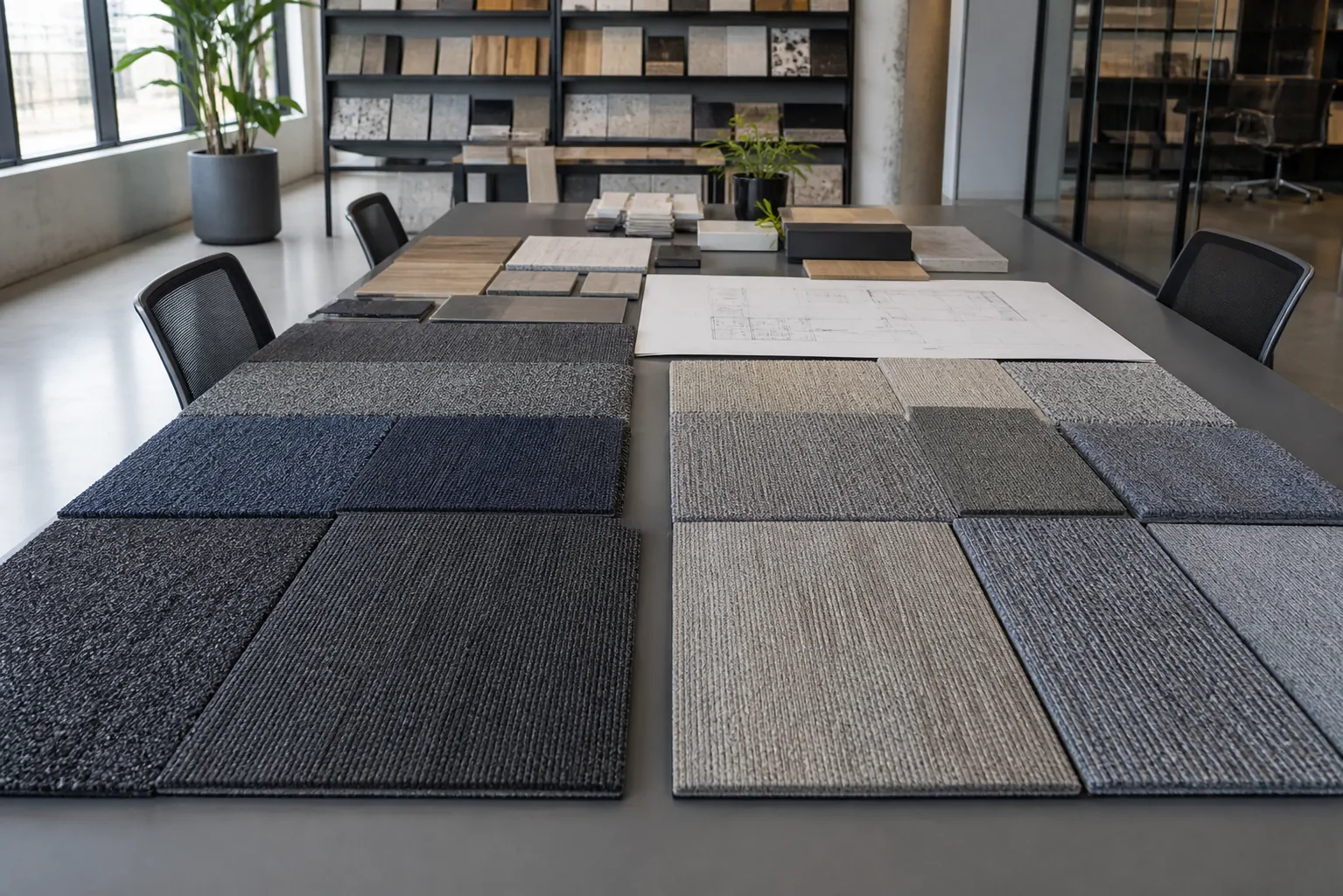
The visible result depends on the selected tile, installation direction, joint alignment, subfloor condition, and lighting. Buyers should not assume every tile system will create the same visual effect. Reviewing samples and a layout proposal helps define whether the intended result is calm and uniform or deliberately modular.
What Is Broadloom Carpet?
Broadloom carpet is supplied in rolls and installed as a continuous floor covering across the planned area. It is often considered for hospitality interiors, hotel guestrooms, corridors, banquet spaces, and areas where a wall-to-wall appearance supports the design concept. Seams may still be necessary, but the visual rhythm is usually less modular than a tile layout.
Broadloom also gives designers a useful canvas for larger custom patterns, gradients, and room-to-room visual continuity. The trade-off is that roll width, seam planning, room geometry, and cutting allowance need careful review before ordering.
Carpet Tiles vs Broadloom Carpet Comparison
Neither format is automatically better. Use the same project brief to compare the two options:
| Comparison area | Carpet tiles | Broadloom carpet |
|---|---|---|
| Product format | Modular units installed in a planned layout. | Roll material installed across the floor area. |
| Appearance | Can create a modular, zoned, or directional effect. | Supports a more continuous wall-to-wall appearance. |
| Installation | Requires tile layout, alignment, and substrate planning. | Requires roll planning, seams, cutting, and substrate preparation. |
| Replacement | Individual areas may be easier to replace when matching material is available. | Local repair can require careful pattern and seam matching. |
| Maintenance | Can support targeted maintenance planning by area. | Maintenance planning follows the installed roll layout and seams. |
| Design flexibility | Useful for colour zoning and modular pattern direction. | Useful for continuous visuals and larger custom patterns. |
| Waste | Depends on layout, room shape, and carton quantities. | Depends on roll width, seams, direction, and cutting plan. |
| Packaging and transport | Usually packed in cartons or project units. | Usually packed as rolls with dimensions that affect handling. |
| Common applications | Offices, meeting spaces, corridors, and flexible commercial layouts. | Hotels, guestrooms, corridors, banquet spaces, and wall-to-wall interiors. |
Appearance and Design
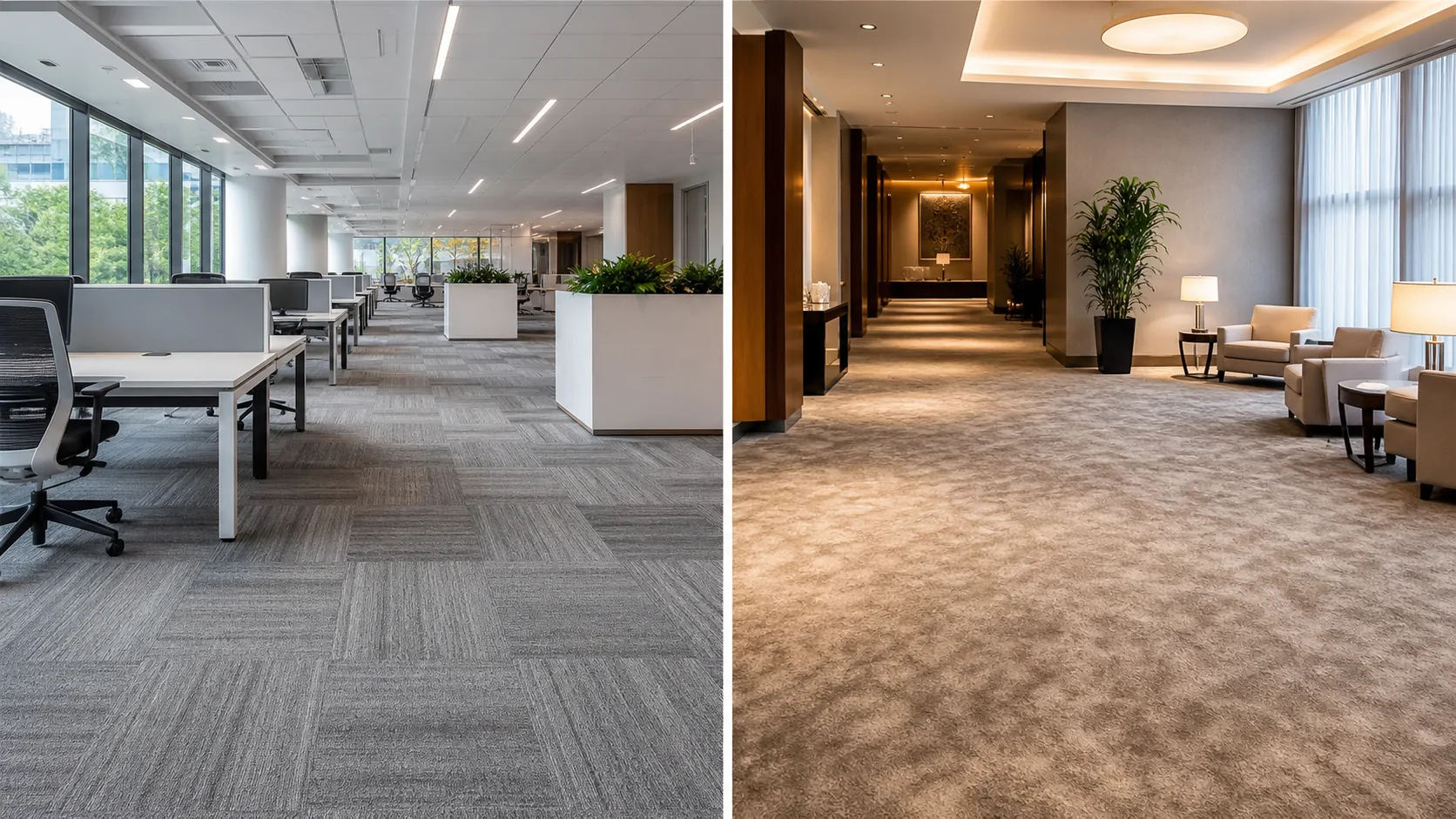
Carpet tiles can make zoning straightforward. Different colours or patterns can define work settings, circulation routes, informal meeting zones, and room boundaries without changing the floor finish category. This can be useful where the interior plan needs visual wayfinding or periodic refreshes.
Broadloom can create a calmer continuous field, especially where the carpet is part of a hospitality scheme. It can also support large-scale custom graphics that cross an area without repeating as individual modules. The right option depends on the required visual rhythm, seam tolerance, and long-term replacement plan, not on a claim that one product always looks more premium.
Installation and Subfloor Requirements
Both formats depend on accurate measurement and a prepared subfloor. For carpet tiles, the installer needs a clear starting point, orientation, cutting plan, and adhesive approach. For broadloom, the team also needs to plan roll direction, seam locations, pattern alignment, and cuts around rooms, columns, and thresholds.
Give the supplier floor plans, room schedules, and installation conditions early. These details help calculate ordered quantity rather than relying only on net floor area. They also make it easier to discuss access restrictions, delivery sequencing, and whether spare material should be packed separately.
Maintenance and Replacement
A key advantage of office carpet tiles is the ability to address a damaged or heavily soiled local area without lifting the entire floor. That benefit still depends on retaining compatible replacement material and following the approved layout direction. Dye lot, pile direction, and tile orientation can affect the visible result.
Broadloom can also be repaired, but local repairs may need careful seam work and pattern matching. For hotel projects, the maintenance plan should be considered beside the guest experience, installation pattern, and future renovation cycle.
Price and Total Project Cost
Do not compare only a quoted rate per square metre. Commercial carpet cost is shaped by product specifications, ordered quantity, waste allowance, installation method, adhesive, spare material, maintenance planning, replacement expectations, packaging, and shipping. A commercial carpet supplier should state what the offer covers and identify items that require buyer confirmation.
A lower commercial carpet price may use a different backing, quantity basis, packing scope, or delivery term. Request the same brief from each supplier and compare the full project cost. Melozon’s guide to commercial carpet price and quote requirements can help buyers prepare consistent inquiry information.
Carpet Tiles for Office Projects
Office carpet tiles are often considered for open work areas, meeting rooms, corridors, and spaces with raised-floor access. A modular layout can support future workstation changes, local replacement planning, and design zoning. The final decision should still account for traffic patterns, furniture movement, cleaning practices, and the installation surface.
For a product-focused starting point, review Melozon’s commercial carpet tiles. A carpet tile manufacturer or wholesale carpet tiles partner will need the same core inputs: project use, area, specification, colour direction, quantity, and delivery destination.
Broadloom Carpet for Hotel Projects
Broadloom is frequently considered by hotel procurement teams when guestrooms, corridors, and hospitality spaces need a continuous visual treatment. It can support wall-to-wall design intent and custom pattern development, while the project team plans seams, roll direction, and future maintenance with care.
A hotel carpet supplier should understand the guest areas, desired pattern scale, room layouts, installation sequence, and required delivery point. A hotel carpet manufacturer can then discuss sample development, custom commercial carpet options, packing, and export coordination without assuming a fixed design or delivery scope.
How to Choose for Your Commercial Project
Carpet tiles are commonly worth exploring when the project needs a modular layout, easy local replacement, several colours or zones, raised-floor access, or flexible office planning. Broadloom is commonly worth exploring when the project needs a continuous wall-to-wall appearance, hospitality character, a larger custom pattern, or fewer visible modular joints.
These are starting points, not fixed rules. Compare the approved sample, installation condition, quantity calculation, maintenance plan, and quote scope before deciding. Buyers can also review Melozon’s commercial carpet buying checklist to organise the project information that affects a purchasing decision.
Questions to Ask a Commercial Carpet Supplier
- What is the project type and application area?
- What appearance and product format are required?
- What quantity, layout, and product specifications should the quote use?
- Which colours, patterns, or custom details need approval?
- What installation conditions or subfloor constraints apply?
- Which samples are needed before order confirmation?
- What is the destination and required arrival date?
How Melozon Supports Commercial Carpet Buyers
Melozon supports commercial buyers with product selection, standard and custom samples, specification communication, custom carpet discussions, bulk order planning, OEM and ODM requirements, commercial carpet quotes, and export packing and shipping coordination. Buyers can also explore Melozon’s commercial carpet solutions and the wider commercial carpet product range before narrowing the inquiry.
Frequently Asked Questions
What is the difference between carpet tiles and broadloom carpet?
Carpet tiles are modular units, while broadloom is supplied in rolls for a more continuous floor covering. Their installation, replacement planning, visual effect, and quantity calculation can differ.
Are carpet tiles better than broadloom carpet?
Neither is always better. The suitable format depends on project use, design intent, installation conditions, maintenance needs, and the required visual result.
Which carpet is better for offices?
Many office projects explore carpet tiles for modular layouts and local replacement planning, but the final choice should match traffic, design, subfloor, and maintenance needs.
Which carpet is better for hotels?
Broadloom is often considered where a continuous hospitality appearance is important. Some hotel areas may still use tiles when modular planning better suits the operating needs.
Are carpet tiles easier to replace?
They can make local replacement more straightforward when compatible replacement material and the approved layout direction are retained.
Is broadloom carpet more expensive?
Cost depends on product construction, quantity, custom design, waste allowance, installation scope, packaging, shipping, and other project conditions. Compare total scope, not only unit price.
Which carpet creates less installation waste?
Waste depends on room geometry, layout, product dimensions, roll width, seams, cutting plan, and packaging quantities. The supplier should show the calculation basis.
Can buyers request samples before ordering?
Yes. Ask whether the sample represents the intended colour, texture, backing, and custom pattern needed for approval before production.
Compare Carpet Tiles and Broadloom Options for Your Project
Carpet tiles and broadloom carpet can both be the right choice when the format matches the project. Send Melozon the project type, application area, estimated quantity, required appearance, product specifications, colours or patterns, destination, and target arrival date to request carpet samples and a project quote.