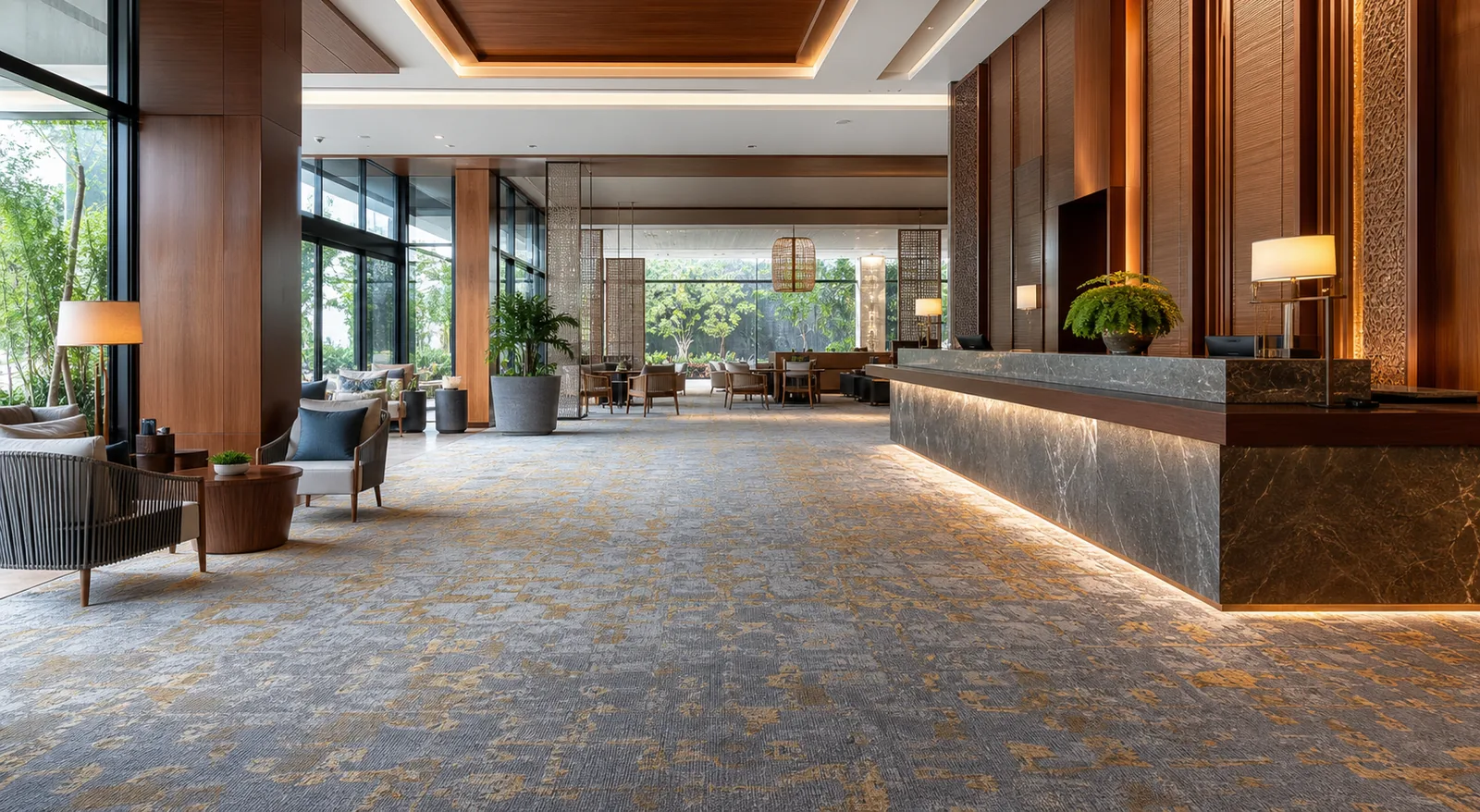
Commercial Carpet Buying Checklist for B2B Projects
Buying commercial carpet is not a matter of choosing the lowest figure on a price list. A practical commercial carpet supplier needs enough project information to recommend the right construction, calculate the right quantity, and issue a usable commercial carpet quote. If the product, delivery scope, and approval process are unclear, a seemingly good commercial carpet price can turn into a costly change later.
This commercial carpet buying checklist gives B2B project teams a clear way to prepare an inquiry, compare options, and confirm the details that matter before ordering. It is designed for importers, hotel procurement teams, contractors, designers, distributors, and developers working across Southeast Asia.

1. Define Your Commercial Carpet Project
Start with the operating context, not a product name. A lobby, guestroom corridor, office floor, meeting room, retail space, and public area can place different demands on the carpet. The same style may look appropriate in several locations while needing a different format, backing, or construction for each one.
Prepare a short project brief with the project type, application area, country and city, new-build or renovation status, expected traffic level, target arrival date, and an indicative budget range. This helps a commercial carpet manufacturer assess the right product route and avoids a quote based on assumptions that do not match the site.
2. Choose the Right Carpet Type
Select the format before discussing small pricing differences. Commercial carpet tiles can suit modular office areas and projects that need flexible replacement planning. Broadloom or wall-to-wall carpet can work well where continuous visual flow is the priority. Custom patterned carpet is often considered when a hotel, hospitality space, or branded environment needs a specific visual direction.
Hotel carpet and office carpet tiles are not separate quality grades by default. The suitable choice depends on the location, design intent, maintenance plan, and approval requirements. Review Melozon’s commercial carpet product range to narrow the inquiry to product families that fit the project.
3. Prepare the Product Specifications
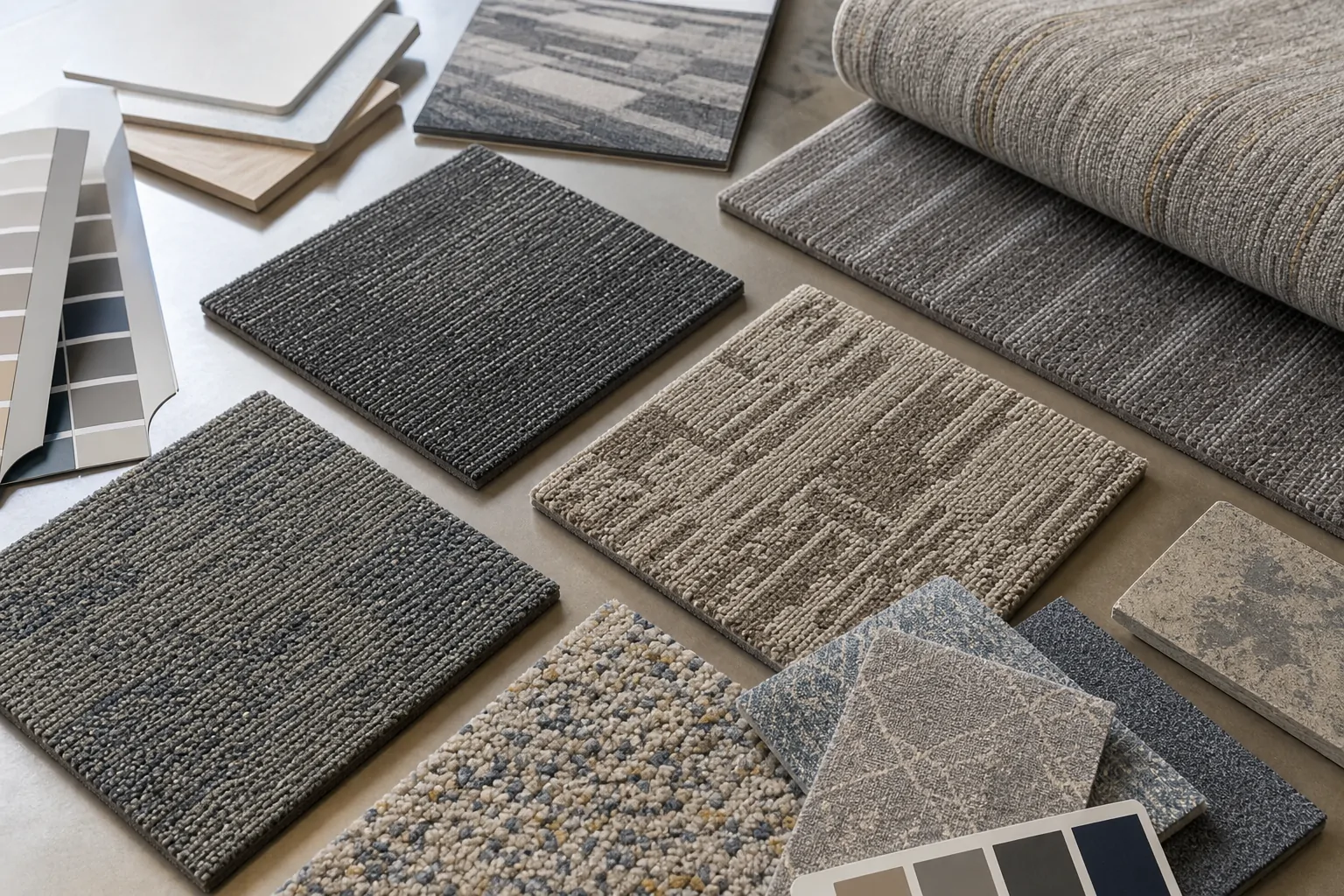
A supplier can only quote consistently when the specification is clear. Include the requested fibre or yarn, construction, backing, tile or roll size, pile height, total thickness, colour, pattern, and performance requirements. If a consultant or client requires test reports, state the required standard and product application rather than assuming a general document will apply.
For custom work, add reference photos, colour references, artwork, or logo files where relevant. A request for custom and bespoke carpet should identify which visual details are fixed and which can be developed with the supplier. This keeps an initial concept from being mistaken for an approved production specification.
4. Calculate the Required Quantity
Do not submit only the building’s total floor area. The quote should distinguish net floor area, ordered quantity, waste allowance, spare material, quantity per colour, quantity per pattern, and full-carton or full-roll quantities. These values are related, but they are not interchangeable.
Room shape, installation direction, seams, roll width, tile layout, and packaging units can affect the material ordered. Ask the supplier to show the quantity basis and identify any reserve stock separately. This gives the buyer a more accurate commercial carpet cost and makes later comparisons fairer.
5. Prepare Floor Plans, BOQ and Design Files
Floor plans, a BOQ, room schedule, carpet layout, reference photos, colour references, and custom artwork make a quote more reliable. They also help the supplier understand where colours change, which rooms need different materials, and whether labels or packing should follow a floor-by-floor sequence.
Even an early drawing is useful when it is marked with the approximate application areas. A better brief reduces back-and-forth on quantity and lets the supplier identify questions before production planning begins.
6. Request and Approve Carpet Samples
Samples should support a procurement decision, not simply decorate a presentation board. Depending on the project, request a standard sample, colour swatch, carpet tile sample, custom colour sample, pattern sample, or approval sample. Confirm what each sample represents: a colour direction, a texture reference, a backing construction, or the final production standard.
Before a formal order, check colour, texture, backing, and the intended design effect in the actual installation environment where possible. For a customised product, document the approved reference and the approval date. This gives both buyer and supplier a common point of comparison if a question arises during production or delivery.
7. Confirm MOQ and Order Breakdown
MOQ should be discussed as an order structure, not a single number. Ask about the total MOQ, MOQ per colour, MOQ per design, MOQ per product series, whether different colours can be combined, and whether the order must use full cartons or rolls. The answer can change with the product series, quantity, colour, design, and level of customisation.
Write the breakdown by item, colour, pattern, size, and quantity. For a deeper review of these variables, see commercial carpet MOQ, samples and lead times. A clear order breakdown prevents the project total from hiding a colour or design that cannot be produced on the assumed basis.
8. Compare Commercial Carpet Quotes
A commercial carpet quote should be compared on the full scope, not only price per square metre. Align the product specification and order quantity first, then check sample charges, custom design charges, packaging, shipping terms, documents, lead time, payment terms, and quotation validity. A lower factory price may exclude services that another supplier has already included.
| Comparison item | Supplier A | Supplier B | Question to resolve |
|---|---|---|---|
| Product specification | Are construction, backing, size, and colour comparable? | ||
| Order quantity | Does each quote use the same waste and spare-stock basis? | ||
| Custom and sample charges | Which development or approval costs are included? | ||
| Packaging and documents | Are labels, pallets, and export documents stated? | ||
| Shipping and payment terms | What is included and what remains buyer-controlled? |
Use this guide to compare commercial carpet supplier quotes when several offers need a line-by-line review. For the inputs behind a more complete request, review commercial carpet price and quote requirements.
9. Confirm Lead Time and Delivery Schedule
Separate sample preparation, buyer approval, production, quality inspection, packing, export shipping, port arrival, and local delivery. A quoted date has little value until the buyer knows whether it refers to factory completion, shipment departure, port arrival, or final project delivery.
Confirm the event that starts production timing, such as specification approval, sample approval, deposit, artwork confirmation, or final order breakdown. If the project has phases, ask how each phase will be scheduled and how approved colours or patterns will be controlled across the shipment plan.
10. Check Packaging and Shipping Terms
Packaging and logistics should be visible in the order, especially for export projects. Confirm carton or roll packaging, pallets, product labels, project labels, destination port, shipping method, Incoterm, freight and insurance, and responsibility for import and local delivery.
Project labels can make receiving and installation more efficient when many rooms, colours, or floors are involved. For regional project considerations, explore Melozon’s commercial carpet solutions and state destination requirements early rather than adding them after production starts.
11. Confirm Documents and Quality Requirements
List the documents needed by the buyer, contractor, consultant, or destination. These may include a product specification sheet, available test reports, commercial invoice, packing list, certificate of origin where required and available, inspection requirements, and the approved sample reference.
Be precise about quality expectations. Confirm who reviews samples, when inspection occurs, how quantities are checked, and how a quality issue should be reported. Do not assume every document, certification, or test report is available for every product without supplier confirmation.
Final Commercial Carpet Buying Checklist
Use this table as the final internal review before confirming a purchase order:
| Checklist Item | Confirmed | Notes |
|---|---|---|
| Project type and application area | ||
| Carpet type and specification | ||
| Floor area and ordered quantity | ||
| Quantity per colour or pattern | ||
| Floor plan, BOQ, or layout | ||
| Sample and approval reference | ||
| MOQ and order breakdown | ||
| Price and quotation validity | ||
| Lead time and required arrival date | ||
| Packaging and labels | ||
| Shipping term and destination | ||
| Documents and quality process | ||
| Payment terms |

How Melozon Supports B2B Carpet Buyers
Melozon supports B2B buyers with product selection, carpet tile inquiries, custom carpet inquiries, standard and custom sample requests, MOQ discussion, commercial carpet quotes, specification communication, OEM and ODM discussions, production schedule communication, and export packing and shipping coordination.
The strongest inquiry is not the longest one. It is the one that identifies the project use, product direction, estimated quantity, colours or designs, destination, and required arrival date. With those inputs, the supplier can clarify unknowns and prepare a quote that is easier to review internally.
Frequently Asked Questions
What should I check before buying commercial carpet?
Confirm the project use, carpet type, specification, quantity, sample, MOQ conditions, price scope, lead time, packaging, shipping, documents, and payment terms.
How do I choose a commercial carpet supplier?
Choose a supplier that can respond to the same complete project brief, explain the specification and quantity basis, and state commercial and delivery conditions clearly.
What information is needed for a commercial carpet quote?
Provide the project type, application area, drawings or area schedule, preferred format, specifications, colours or designs, quantity, destination, and required arrival date.
How do I calculate the required carpet quantity?
Start with the actual installation areas, then confirm the layout, product dimensions, waste allowance, carton or roll quantity, and spare material with the supplier.
Can I request carpet samples before ordering?
Yes. Ask which sample type is available and whether it represents the final colour, texture, backing, or custom pattern needed for approval.
What affects commercial carpet MOQ?
MOQ can depend on product series, total quantity, colour, pattern, customisation, and packaging or production requirements.
What affects commercial carpet lead time?
Lead time depends on product availability, sample or artwork approval, quantity, custom requirements, production planning, inspection, packing, shipping, and destination handling.
How should I compare commercial carpet prices?
Compare product specification, ordered quantity, sample and custom charges, packaging, shipping terms, documents, payment terms, and quotation validity before comparing totals.
Ready to Prepare Your Carpet Inquiry?
A complete B2B carpet purchase brings product, specification, quantity, samples, MOQ, timing, packaging, logistics, and commercial terms into one decision. Request a commercial carpet quote from Melozon with your project type, carpet type, estimated quantity, specifications, colours or designs, destination, and required arrival date.