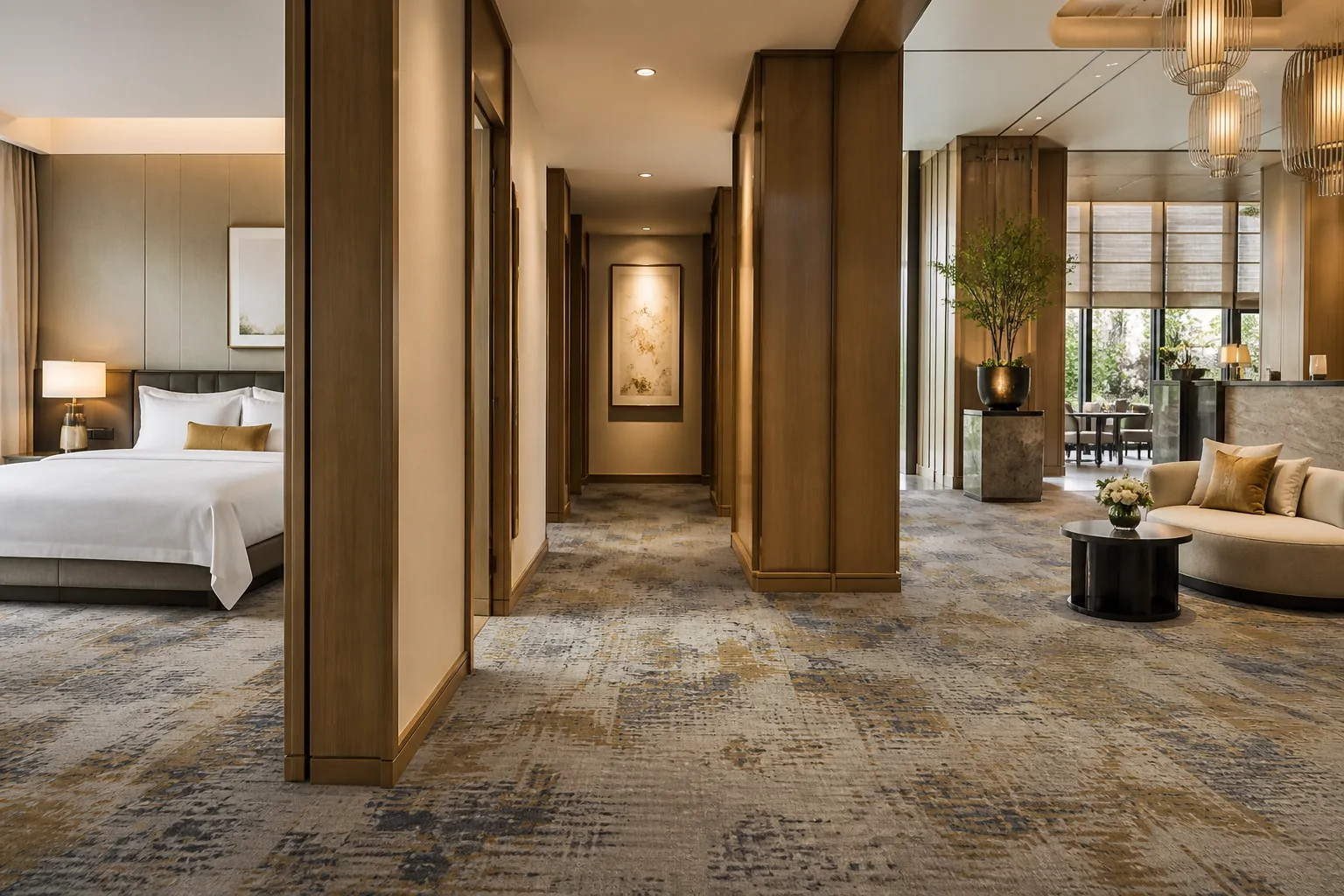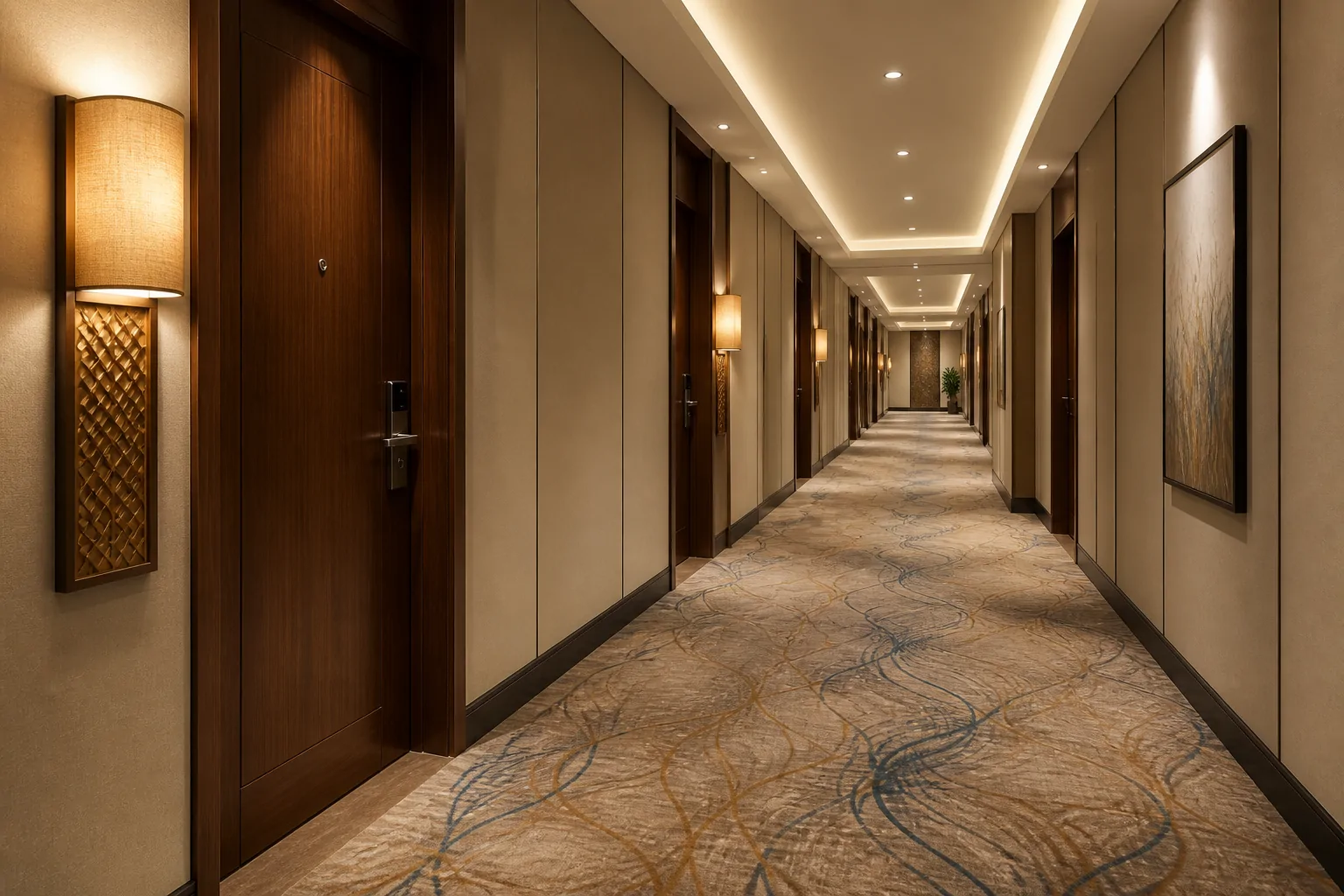
Why Carpet Tiles Are Commonly Used in Office Projects
Carpet tiles are a common office flooring choice because they combine modular installation, local replacement, design flexibility, and practical maintenance planning. For developers, architects, contractors, and procurement teams, office carpet tiles can make it easier to match flooring decisions with a changing commercial environment.
Commercial carpet tiles are not automatically better than broadloom carpet in every project. The useful question is whether the product format, fiber, construction, backing, installation method, and maintenance plan suit the specific office. This guide explains why modular carpet tiles are widely considered for offices and what buyers should confirm before ordering.
What Are Office Carpet Tiles?
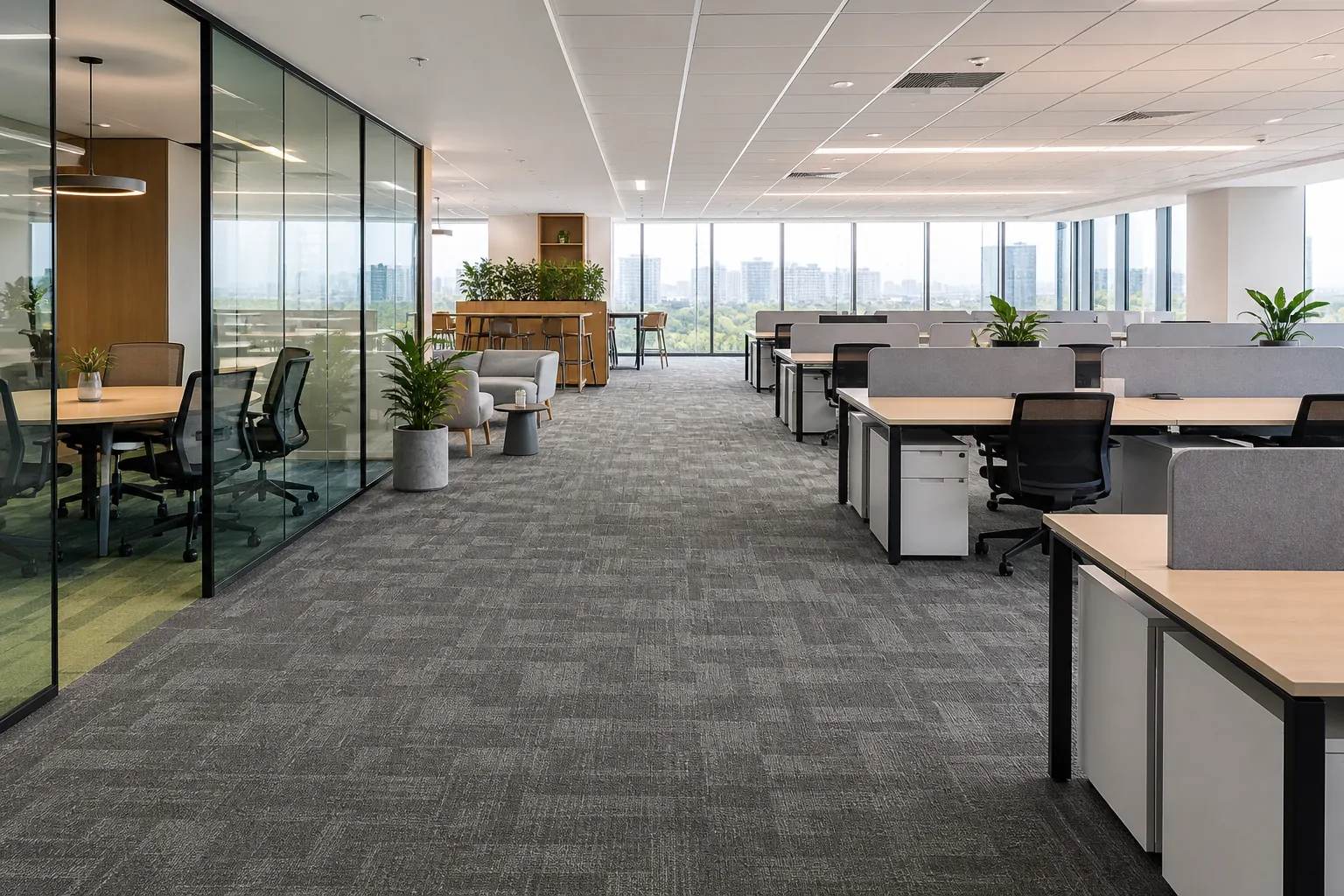
Office carpet tiles are individual carpet squares or modules installed together to form a floor. They are available in different sizes, colors, patterns, fibers, and backing options. Because each module is separate, the floor can be planned by zone and selected tiles can be accessed later for maintenance or replacement.
The modular format works differently from broadloom carpet, which is supplied in larger rolls. Both formats can be appropriate for commercial projects. Buyers should compare the design objective, installation conditions, expected traffic, seam appearance, and replacement strategy before choosing one.
Why Are Carpet Tiles Popular in Offices?
Carpet tiles are often considered because they support modular installation, individual tile replacement, easier maintenance planning, flexible office layouts, design zoning, raised-floor access, easier handling, spare-tile storage, and workplace changes over time.
These are practical advantages rather than universal promises. The value of a tile system depends on product construction, installation quality, access to replacement stock, and how the office will be used. For a busy project, the best format may vary between workspaces, meeting rooms, corridors, and reception areas.
Easy Replacement and Maintenance
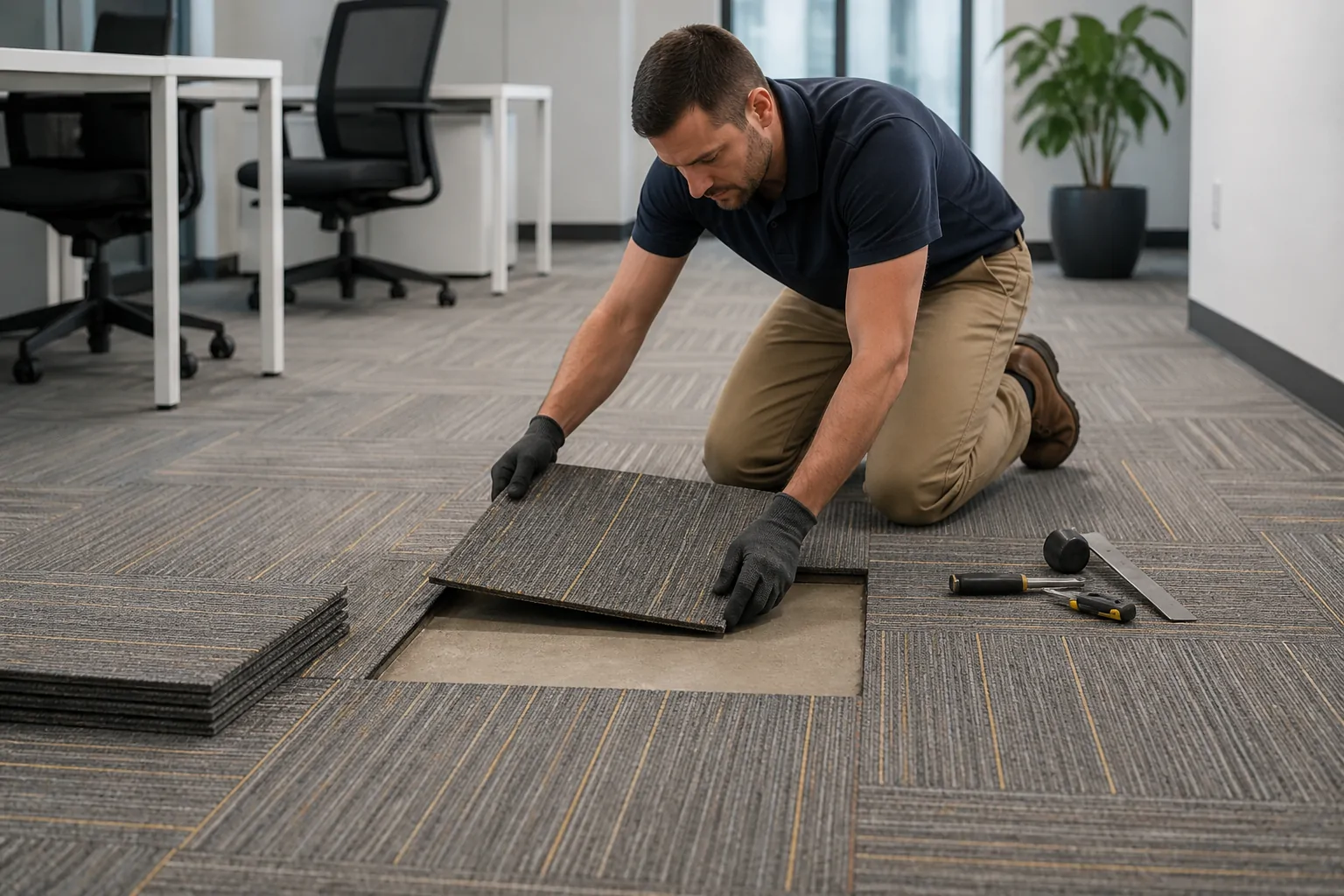
One of the clearest benefits of carpet tile flooring is local replacement. If a small area is stained or damaged, the project may be able to replace the affected modules instead of removing the whole floor. This can be useful when an office remains operational during a staged renovation or when damage is concentrated near a workstation, pantry, or entrance.
Keep spare carpet squares from the same production batch where possible. A record of product name, color, pattern, backing, and installation direction also makes future maintenance easier. Local replacement still needs to follow the supplier’s installation guidance and the existing floor condition.
Carpet Tiles and Raised Access Floors
Office carpet tiles may be considered for raised access floors because the modular format can work with cable access, power systems, IT infrastructure, and future office layout changes. When a floor panel needs access, a modular flooring plan may help limit the area affected by the work.
Actual suitability still depends on the raised-floor system, backing, adhesive or installation method, transitions, and the project’s technical requirements. Confirm these details with the flooring contractor and supplier before approval.
Design Flexibility for Modern Offices
Modular carpet tiles give designers options for color combinations, directional installation, pattern shifts, and workspace zoning. Office carpet can use one palette in open workspaces, a different direction in corridors, or a quieter design in meeting rooms and breakout areas.
Office carpet flooring can also use color or pattern to support circulation routes and distinguish functions without adding hard partitions. Digital images are useful during concept development, but physical samples should be reviewed under the project lighting before final approval.
Carpet Tiles for High-Traffic Office Areas
High traffic carpet tiles may be considered for main corridors, reception areas, open offices, meeting zones, and shared workspaces. However, the phrase carpet tile does not by itself confirm traffic suitability.
Buyers should check fiber, construction, pile height, density, face weight, backing, installation, and the maintenance plan. Rolling chairs, entry soil, furniture movement, cleaning frequency, and the expected path of travel all affect the appropriate commercial carpet specification.
Office Carpet Tiles vs Broadloom Carpet
Carpet tiles and broadloom carpet solve different project needs. Neither format is always the better choice. The table below helps teams compare the practical questions before selecting office floor carpet.
| Factor | Carpet Tiles | Broadloom Carpet |
|---|---|---|
| Product format | Individual modular tiles | Larger carpet rolls |
| Local replacement | May allow selected modules to be replaced | May require a larger replacement area |
| Layout flexibility | Supports modular patterns and zoning | Supports continuous pattern planning |
| Raised-floor access | May support access planning in selected offices | Depends on layout and installation approach |
| Design appearance | Can use directional or zoned tile patterns | Can provide a continuous broadloom effect |
| Seam appearance | Tile joints are part of the modular layout | Seams depend on roll width and installation layout |
| Maintenance planning | Can support spare-tile and local repair plans | Requires a suitable repair and spare-material plan |
| Common office applications | Open offices, meeting rooms, corridors, support spaces | Feature areas, executive spaces, and continuous designs |
For a fuller format comparison, read Melozon’s guide to carpet tiles vs broadloom carpet.
Where Are Carpet Tiles Commonly Used in Offices?
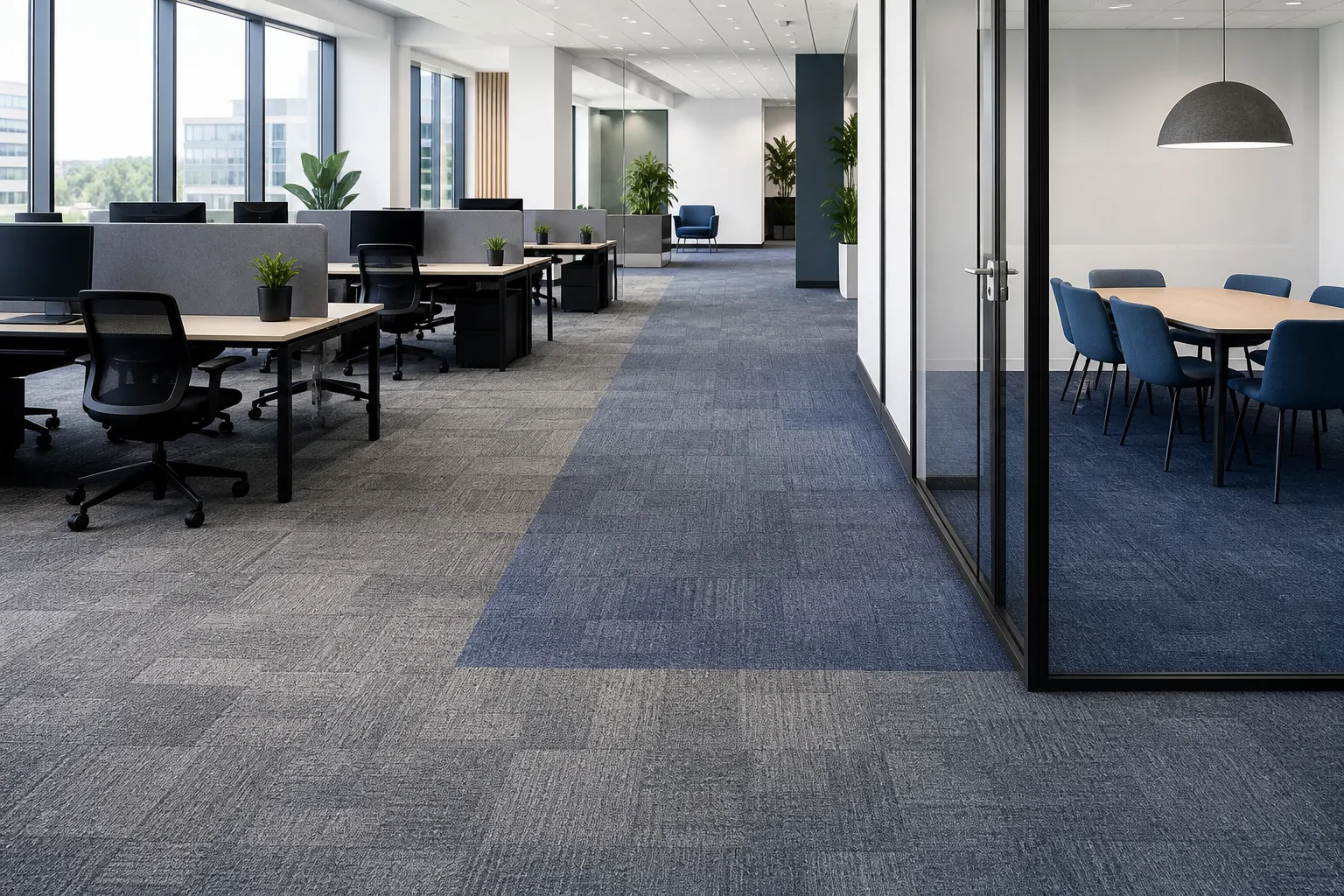
Carpet tiles are commonly used in open-plan offices, private offices, meeting rooms, conference rooms, corridors, reception areas, breakout spaces, training rooms, and administrative areas. Different zones can use different specifications based on traffic, design, cleaning, and maintenance requirements.
What Specifications Should Office Buyers Check?
Review fiber type, carpet construction, pile height, face weight, density, tile size, backing type, total thickness, installation method, available test reports, and maintenance requirements. Do not use one number as a universal quality measure.
Backing can affect installation, dimensional stability, weight, and floor transitions. Review the guide to carpet tile backing types, then compare the full product information with the office project brief.
How to Choose Office Carpet Tiles
Start with expected foot traffic, office layout, raised-floor requirements, cleaning frequency, interior design, replacement strategy, budget, project quantity, and installation conditions. Then compare suitable samples and specifications on the same basis.
A product that works for a quiet meeting room may not suit a busy corridor. For technical comparison, use the guides to commercial carpet pile height, density and weight and the commercial carpet specification sheet.
Questions to Ask a Carpet Tile Supplier
- What fiber and construction are used?
- What backing is available?
- What are the pile height and face weight?
- Is the product suitable for the expected office traffic?
- Can it be considered for raised access floors?
- What installation method is recommended?
- Are physical samples and relevant test reports available?
- Can colors or patterns be customized?
- What are the MOQ, production lead time, and export packing method?
How Melozon Supports Office Carpet Projects
Melozon can help buyers with office carpet tile selection, product specification communication, fiber and backing discussions, color and pattern customization, standard and custom samples, OEM and ODM discussions, bulk commercial orders, project quotations, and export packing and shipping coordination.
Explore Melozon’s commercial carpet tiles and broader commercial carpet products before preparing an office project brief.
Frequently Asked Questions
Why are carpet tiles commonly used in offices?
They may support modular installation, local replacement, design zoning, maintenance planning, and changing office layouts.
Are carpet tiles good for office flooring?
They may be suitable when the product construction, backing, installation, traffic, cleaning, and replacement plan match the office requirements.
What are the advantages of office carpet tiles?
Common advantages include modular handling, local replacement planning, flexible layouts, spare-tile storage, and design options.
Are carpet tiles suitable for high-traffic offices?
They may be suitable when the selected product is designed for the expected traffic and is supported by appropriate installation and maintenance.
Can carpet tiles be used over raised access floors?
They may be considered for raised-floor offices, subject to the floor system, backing, installation method, transitions, and technical requirements.
Are carpet tiles easier to replace than broadloom carpet?
Individual tiles may make local replacement more practical, but the result depends on spare stock, batch consistency, floor condition, and installation.
What type of carpet tile is best for an office?
There is no universal best type. Select by traffic, layout, design, cleaning, fiber, construction, backing, and project conditions.
How do I choose commercial carpet tiles?
Compare the full specification, samples, intended application, installation needs, replacement strategy, and maintenance plan.
Can office carpet tiles be customized?
Custom colors and patterns may be considered, subject to product and order requirements. Confirm with samples before approval.
Should I request samples before ordering carpet tiles?
Yes. Samples help buyers review color, pattern, texture, construction, and suitability for the intended office area.
Request Office Carpet Tile Samples and a Project Quote
Send Melozon your office project type, floor area, expected traffic level, preferred design, estimated quantity, and destination to request carpet samples and a project quote.