Hotel Corridor Carpet Selection Guide
A hotel corridor carpet has to work harder than carpet in many other hotel spaces. A typical hotel hallway carpet carries continuous guest movement, wheeled luggage, housekeeping carts, regular cleaning, and long sightlines that make wear easy to notice. For a Southeast Asia project, selecting a high traffic carpet means balancing construction, maintenance, acoustics, visual direction, and budget rather than choosing only by color or thickness. This guide helps procurement teams, designers, contractors, and importers define a practical corridor carpet specification before requesting samples or a quotation.
What Makes Hotel Corridor Carpet Different?
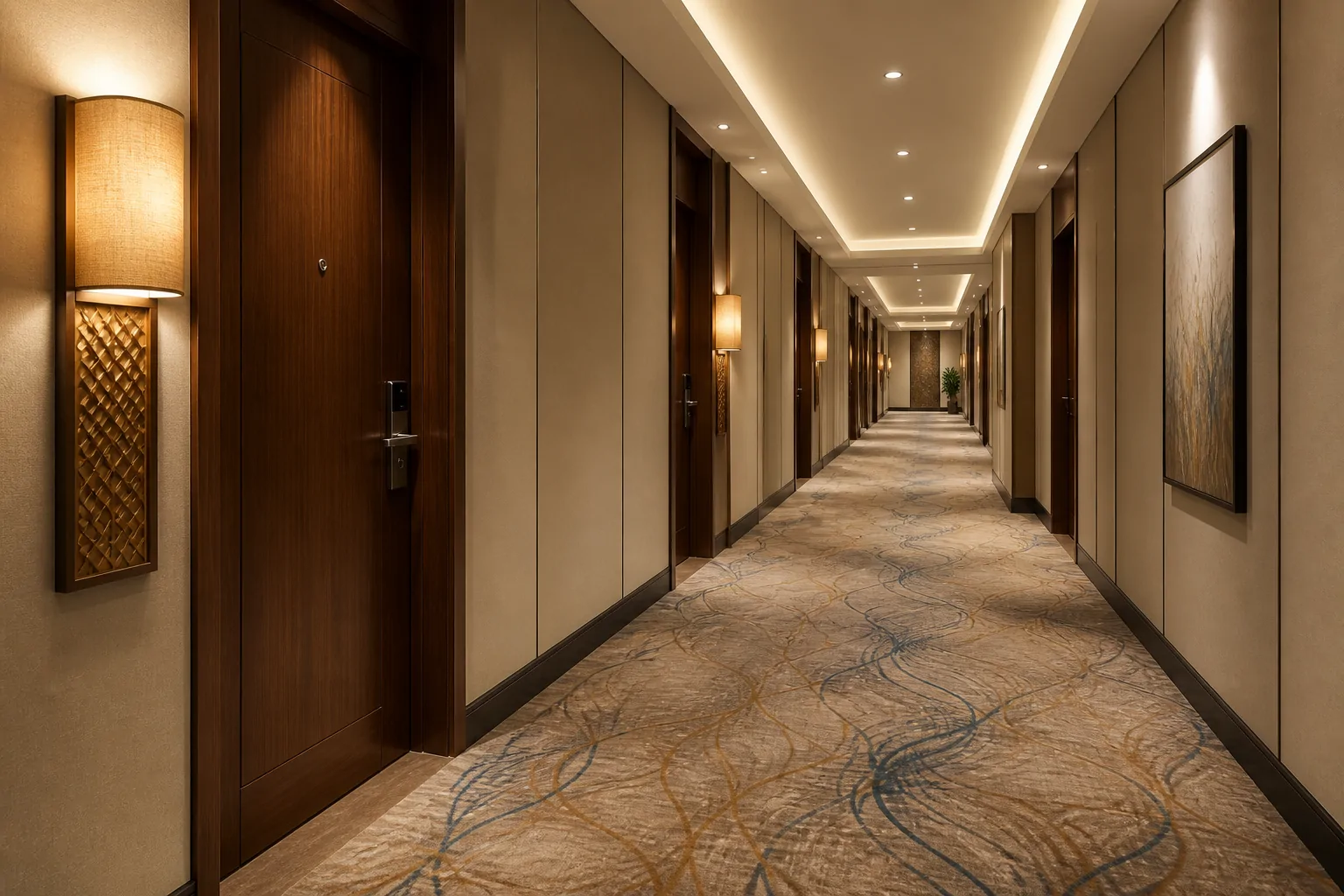
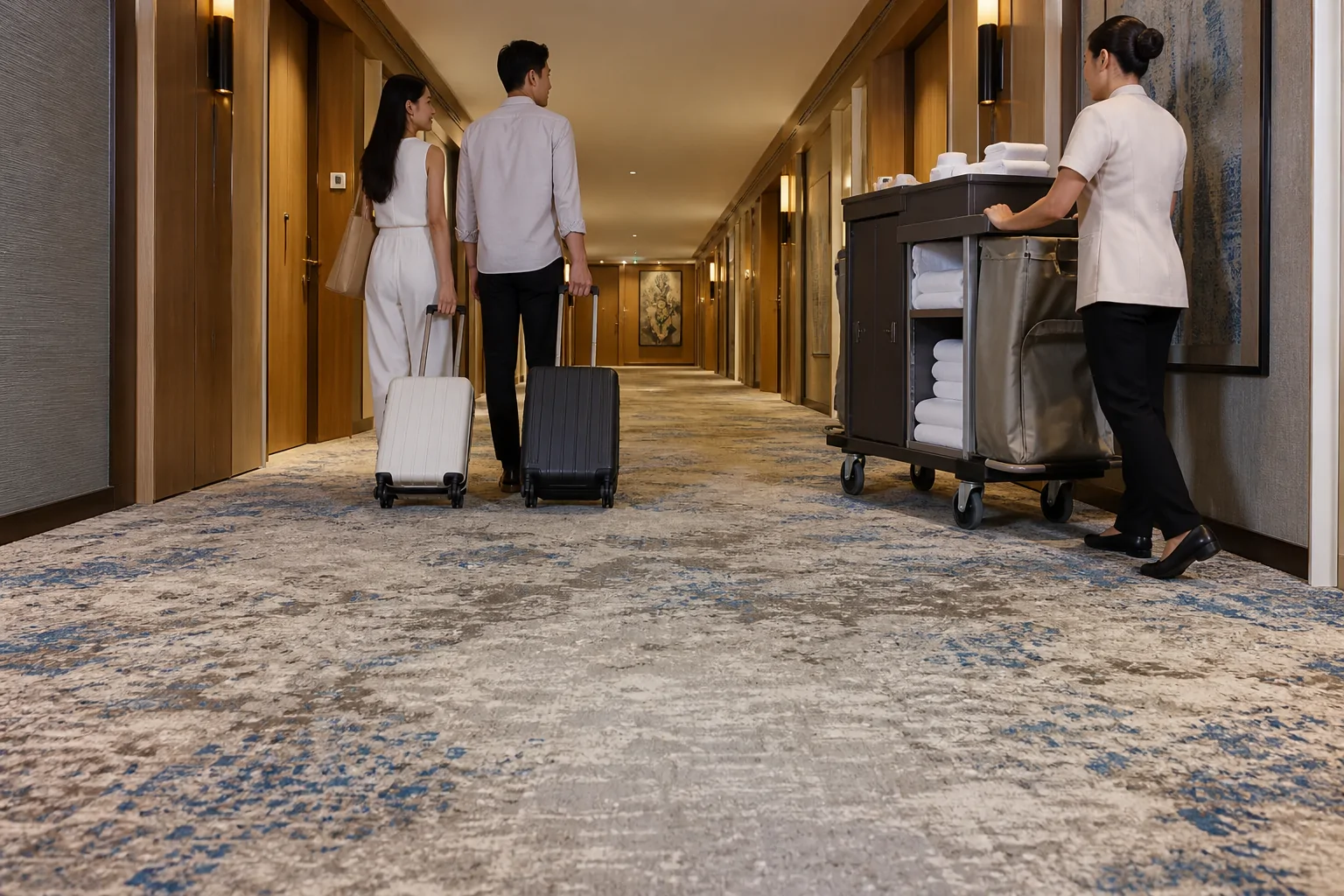
Hotel corridors are narrow circulation routes that operate all day. Guests walk in both directions, suitcases concentrate rolling pressure along common paths, and cleaning teams need predictable access. Unlike a guest room, a corridor also has long visual sightlines: a worn path, a visible seam, or an inconsistent pattern direction can affect the appearance of an entire floor. The right corridor carpet therefore considers continuous traffic, luggage wheels, housekeeping carts, frequent cleaning, noise control, and appearance retention together.
Key Factors When Choosing Hotel Corridor Carpet
- Expected traffic: Identify peak guest flow, service routes, lifts, and turning points before selecting a commercial carpet construction.
- Fiber and construction: Review fiber type, pile construction, pile height, density, face weight, and total weight as a combination.
- Backing and installation: Match backing options and installation method to the subfloor, access conditions, and future replacement plan.
- Cleaning requirements: Consider entrance soil, beverage spills, vacuuming routines, spot cleaning, and maintenance access.
- Design coordination: Confirm pattern direction, color, door locations, lighting, and visual zoning with the hospitality interior.
There is no single best number for pile height, density, or face weight. A supplier should explain how those values work with the planned traffic, fiber, backing, maintenance routine, and project budget. A commercial carpet specification sheet helps project teams compare proposals on the same basis.
Why High-Traffic Performance Matters
A hotel corridor receives more than foot traffic. Suitcases, service carts, cleaning equipment, and occasional furniture movement add repeated stress in predictable lanes. A high traffic commercial carpet should be assessed for the way its fiber, construction, density, backing, and maintenance plan work together. A carpet that appears thick or heavy is not automatically the more durable option for a hotel hallway.
Choosing the Right Carpet Fiber
Nylon, polypropylene or olefin, and solution-dyed options can all be relevant to a hospitality carpet project, depending on the product construction and operating conditions. Nylon is often evaluated where appearance retention and traffic are priorities. Polypropylene can be considered where stain exposure and budget need careful review. Solution-dyed options can be useful where color consistency and cleaning expectations matter. The useful question is not which fiber is universally best, but which fiber-and-construction combination fits the corridor’s traffic, soil exposure, cleaning method, and design requirements. For a fuller comparison, see nylon vs polypropylene commercial carpet.
Carpet Pile Height, Density and Weight
Pile height describes the visible fiber height. Face weight indicates the fiber weight on the carpet face. Density indicates how closely the pile is packed, while total weight includes other parts of the product. These figures should be compared together, not used as isolated shortcuts. A lower-pile option may suit a corridor when it supports routine cleaning and trolley movement, while a different construction may be needed to meet the desired texture and visual effect. Review the commercial carpet pile height, density and weight guide when aligning quotations.
Broadloom vs Carpet Tiles for Hotel Corridors
| Factor | Broadloom Carpet | Carpet Tiles |
|---|---|---|
| Visual continuity | Continuous effect across long runs | Modular layout with visible module logic |
| Seams | Fewer seams across a corridor width | More joints between modules |
| Local replacement | Requires planned spare material and matching | Individual modules may simplify replacement |
| Custom pattern options | Suitable for large-scale continuous patterns | Suitable for modular patterns and layouts |
| Maintenance planning | Plan repair areas and spare stock early | Plan replacement modules and direction |
| Installation | Requires roll planning and seam coordination | Requires module layout and substrate preparation |
| Common hotel applications | Long corridors needing a continuous hotel carpet design | Projects prioritizing modular maintenance |
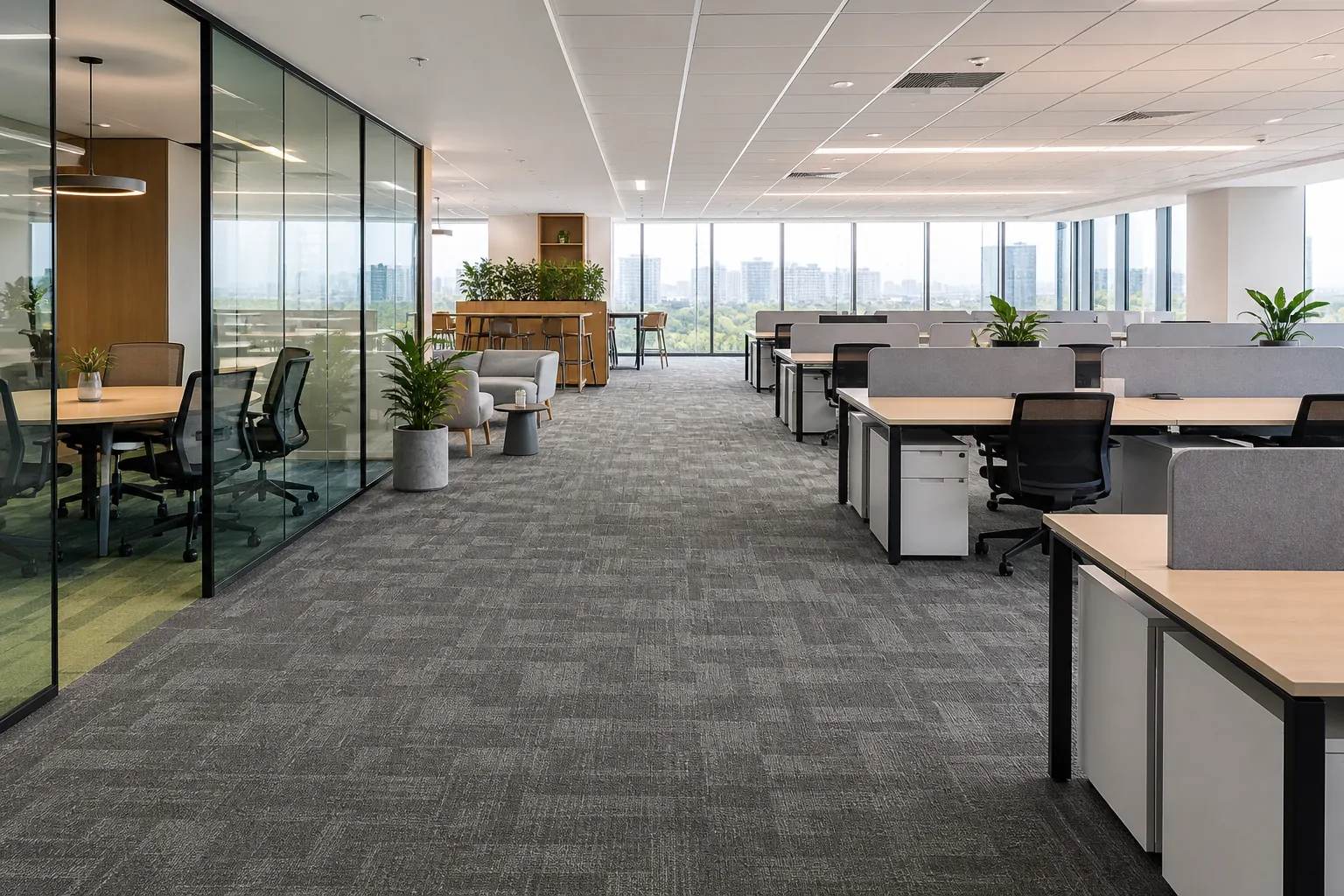
Broadloom carpet is often considered for corridors that need a continuous visual effect or a large custom pattern. Commercial carpet tiles can suit projects that value modular replacement and maintenance access. The decision should be based on design, installation conditions, traffic, and lifecycle planning. Compare the two formats in carpet tiles vs broadloom carpet.
Hotel Corridor Carpet Design
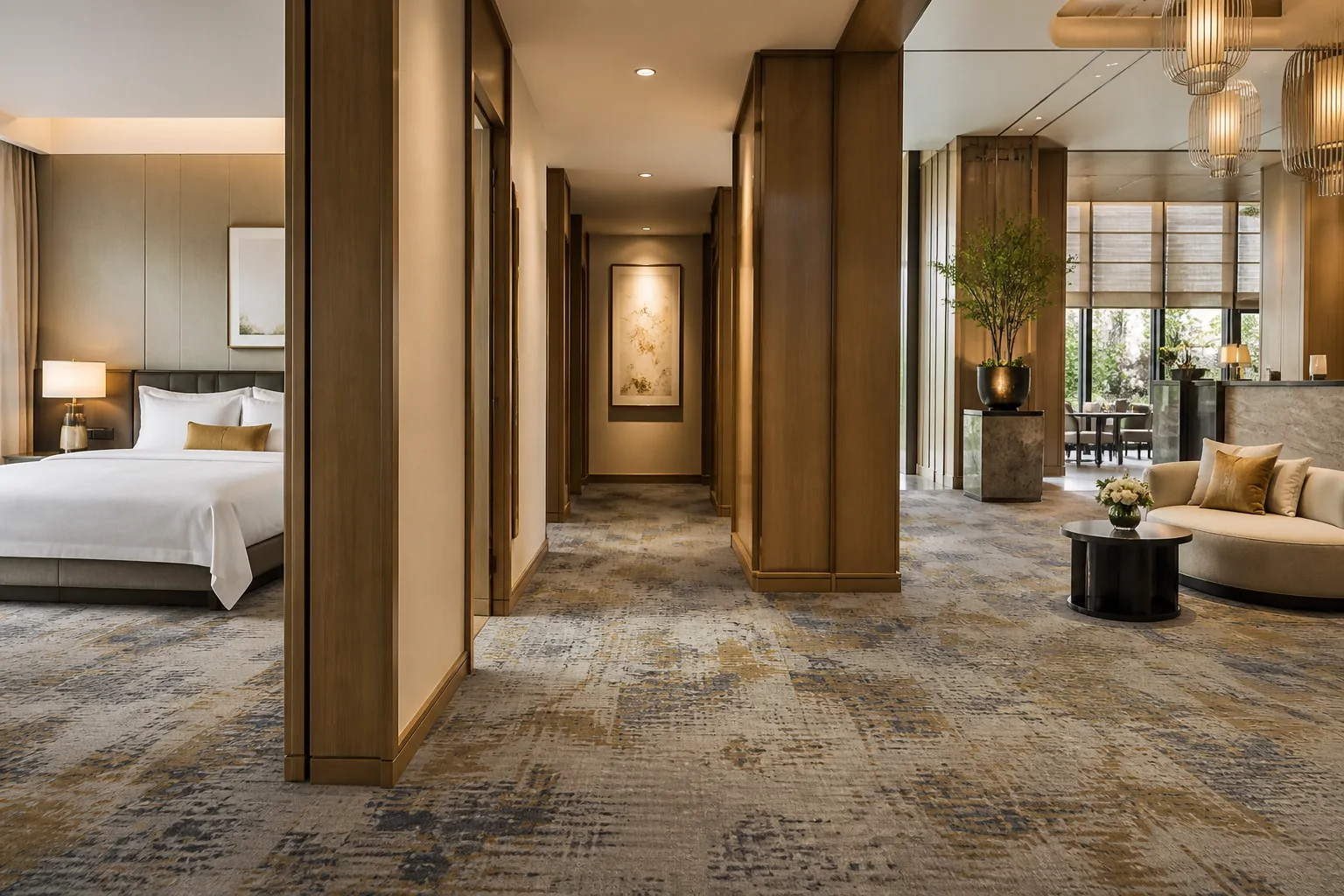
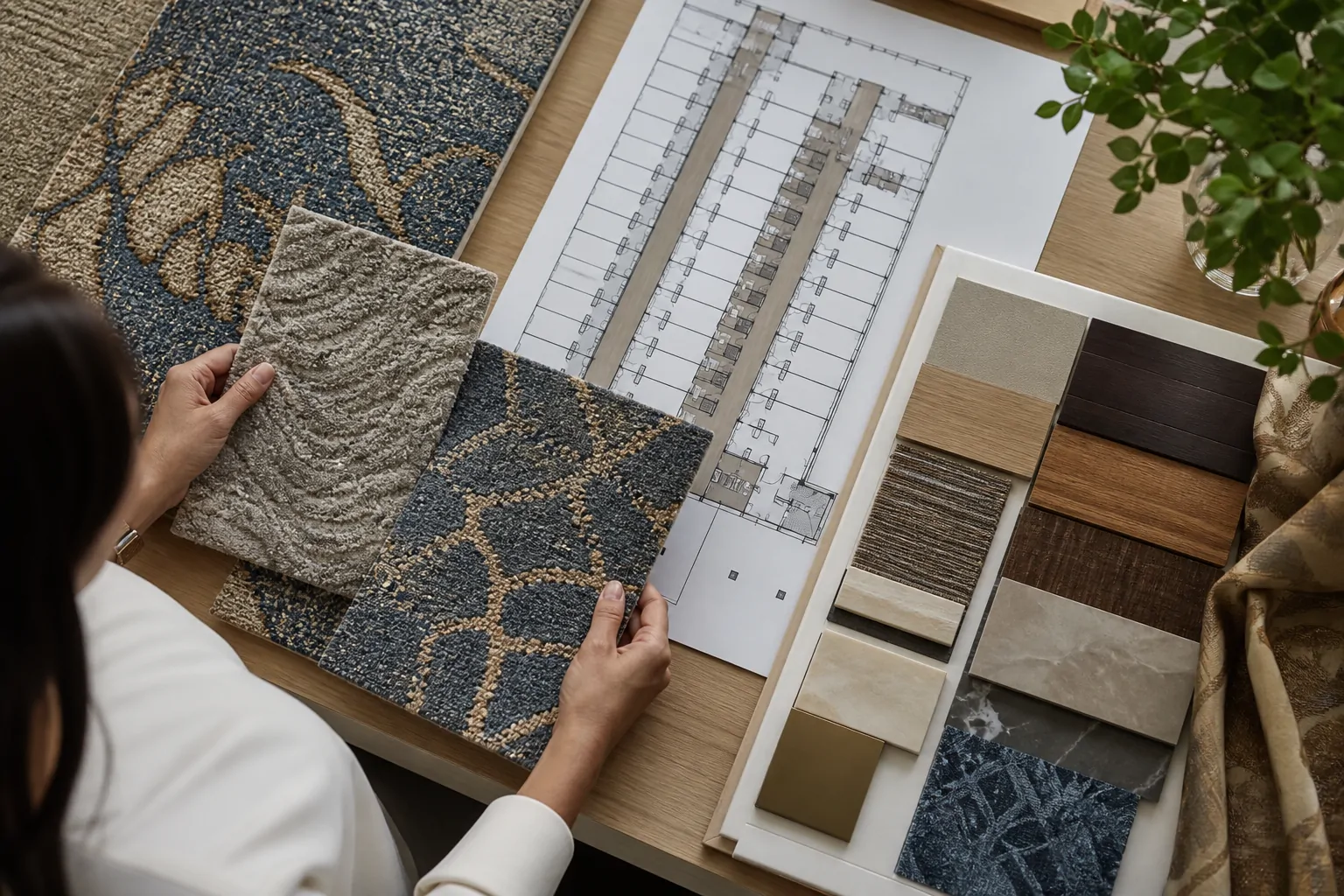
A long corridor gives hotel carpet design a practical role. Pattern scale and direction can guide the eye, support wayfinding, create visual zoning near lifts or room clusters, and coordinate with doors, walls, and lighting. Color combinations should account for everyday soil and traffic marks without making the interior feel overly dark. With custom hotel carpet, a project can review patterns, colors, and repeat direction against the actual corridor plan before approval.
Cleaning, Maintenance and Acoustic Comfort
Corridor maintenance starts at the specification stage. Discuss entrance dirt, spill risk, housekeeping schedules, vacuuming, spot cleaning, and access for larger cleaning equipment. Hotels should also plan spare carpet from the approved batch for later repair or local replacement. Hospitality carpet can contribute to a quieter and softer-feeling interior, but actual acoustic comfort depends on the carpet construction, backing, subfloor, installation method, and wider building design.
Common Mistakes When Selecting Corridor Carpet
- Choosing only by color.
- Comparing only price per square meter.
- Assuming heavier carpet is always better.
- Ignoring luggage and trolley traffic.
- Ignoring backing type and subfloor conditions.
- Selecting pile height without considering cleaning.
- Forgetting spare carpet for future replacement.
- Approving without physical samples.
- Ignoring installation conditions and pattern direction.
- Using the same specification for every hotel area.
Questions to Ask a Hotel Carpet Supplier
- Is this carpet suitable for hotel corridor traffic?
- What fiber and construction are used?
- What are the pile height, density, face weight, and backing options?
- Would broadloom or carpet tile better match this project?
- Can colors and patterns be customized, and are physical samples available?
- What test reports, MOQ, production lead time, and export packing options are available?
- How should spare material be planned for future replacement?
How Melozon Supports Hotel Corridor Projects
Melozon supports hotel corridor carpet selection with fiber and backing comparisons, broadloom and carpet tile discussions, custom colors and patterns, standard and custom samples, OEM or ODM communication, bulk commercial hotel carpet quotations, and export packing and shipping coordination. For a wider area-by-area view, read how to choose carpet for hotel guest rooms, corridors and lobbies, then explore commercial carpet products for project options.
Request Hotel Corridor Carpet Samples and a Project Quote
Send Melozon your hotel corridor area, expected traffic level, design requirements, estimated quantity, destination, and project schedule to discuss suitable carpet options and request samples. Request hotel carpet samples and a quote.
Hotel Corridor Carpet FAQ
What type of carpet is best for hotel corridors?
The suitable option depends on traffic, luggage and cart routes, cleaning needs, design, backing, and installation conditions. Compare the complete construction rather than one specification alone.
What makes a good hotel corridor carpet?
A good option fits the expected high traffic, retains an appropriate appearance, supports cleaning, and works with the corridor design and replacement plan.
Is nylon carpet suitable for hotel hallways?
Nylon can be suitable for hotel hallways when the selected product construction and maintenance plan meet the project’s requirements.
Should hotel corridor carpet be low pile?
Lower pile may be considered where cleaning and wheeled traffic are important, but pile height should be reviewed with density, fiber, and the desired visual effect.
Are carpet tiles suitable for hotel corridors?
They can be suitable where modular replacement and maintenance are priorities; project design and installation conditions still determine the best fit.
Is broadloom carpet suitable for hotel hallways?
Broadloom can be suitable for long hotel hallways that need visual continuity or a continuous custom pattern.
What carpet is suitable for high-traffic hotel areas?
Select high-traffic carpet by reviewing the intended route, fiber, construction, density, backing, cleaning plan, and replacement strategy.
How do I choose a hotel corridor carpet design?
Review pattern scale, direction, colors, sightlines, doors, lighting, and soil-hiding requirements against the actual corridor plan and samples.
Can hotel corridor carpet be customized?
Custom hotel carpet discussions can cover colors, patterns, samples, and project-specific specification communication.
Should hotels keep spare carpet for future replacement?
Yes. Planning approved spare material from the same batch can help with later repairs or local replacement.