Commercial Carpet Pile Height, Density and Weight Explained
Commercial carpet specification sheets often list carpet pile height, carpet face weight, carpet density, and total carpet weight. These figures describe different parts of a product. They are useful only when read together with fiber, construction, backing, traffic, installation, and maintenance needs.
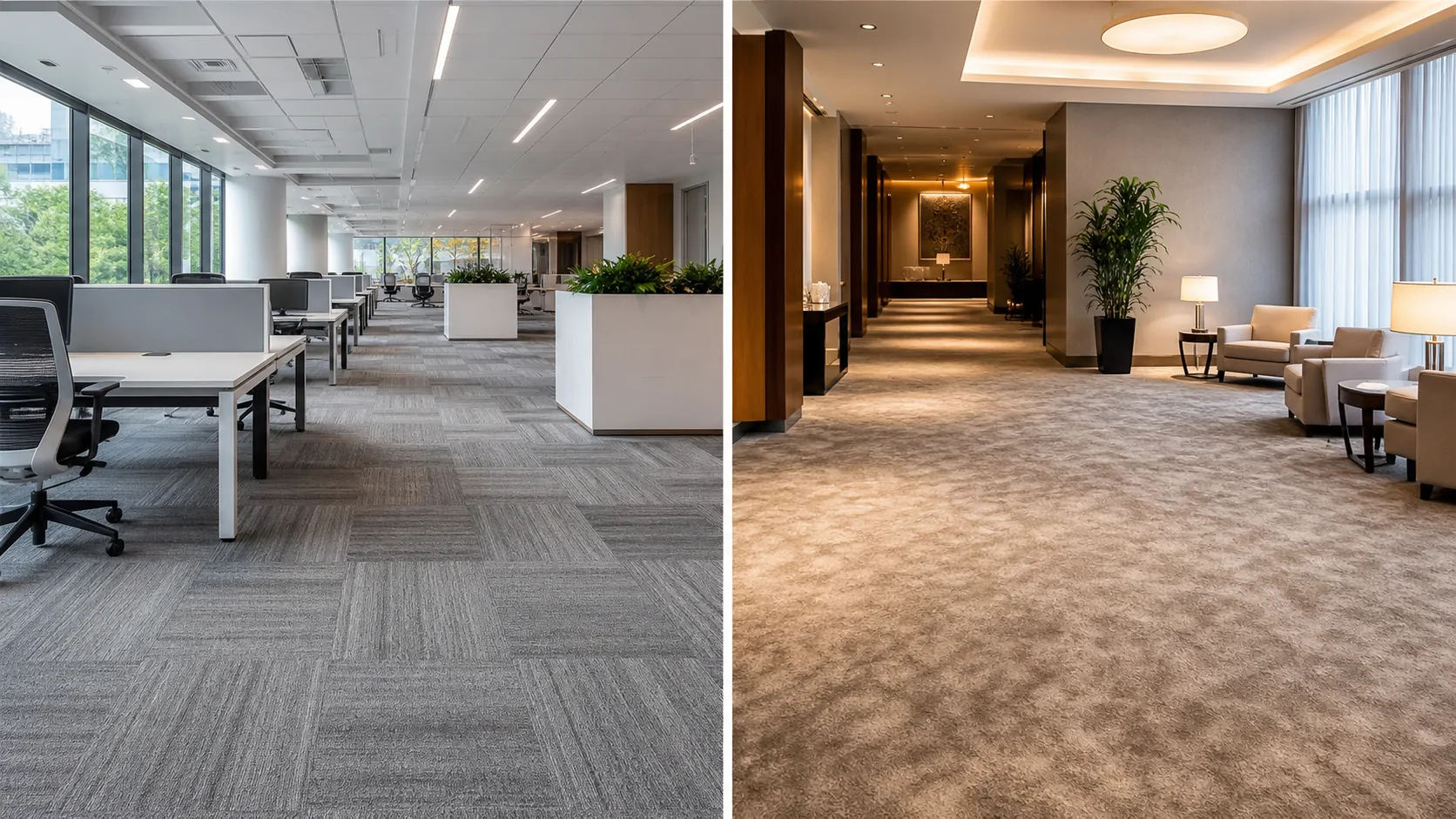
A thicker, heavier, or denser commercial carpet is not automatically the better choice. A practical comparison starts with the intended area: an office corridor, hotel guest room, classroom, healthcare zone, retail entrance, or public waiting area may each need a different balance of appearance, cleaning, comfort, and replacement planning.
What Is Carpet Pile Height?
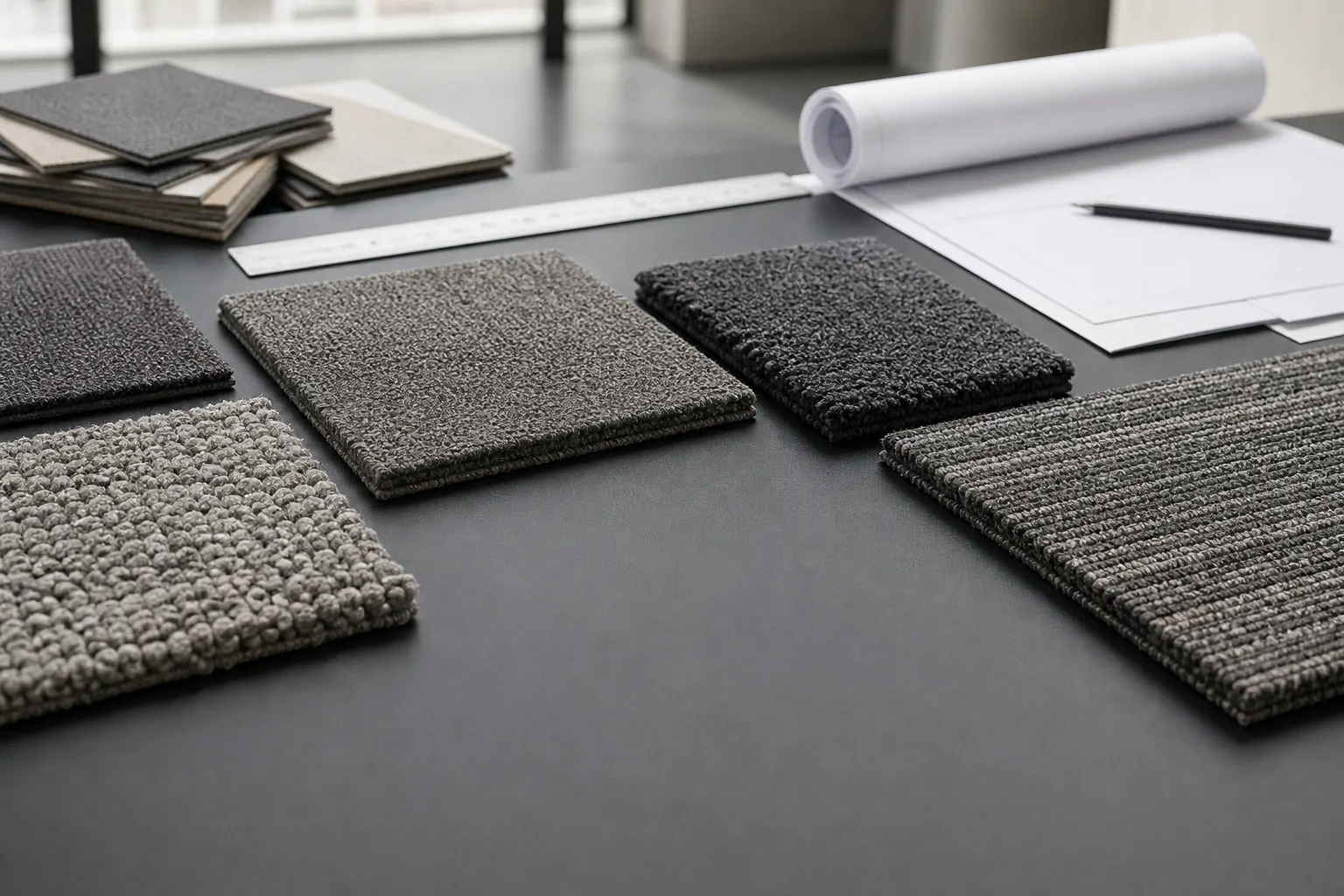
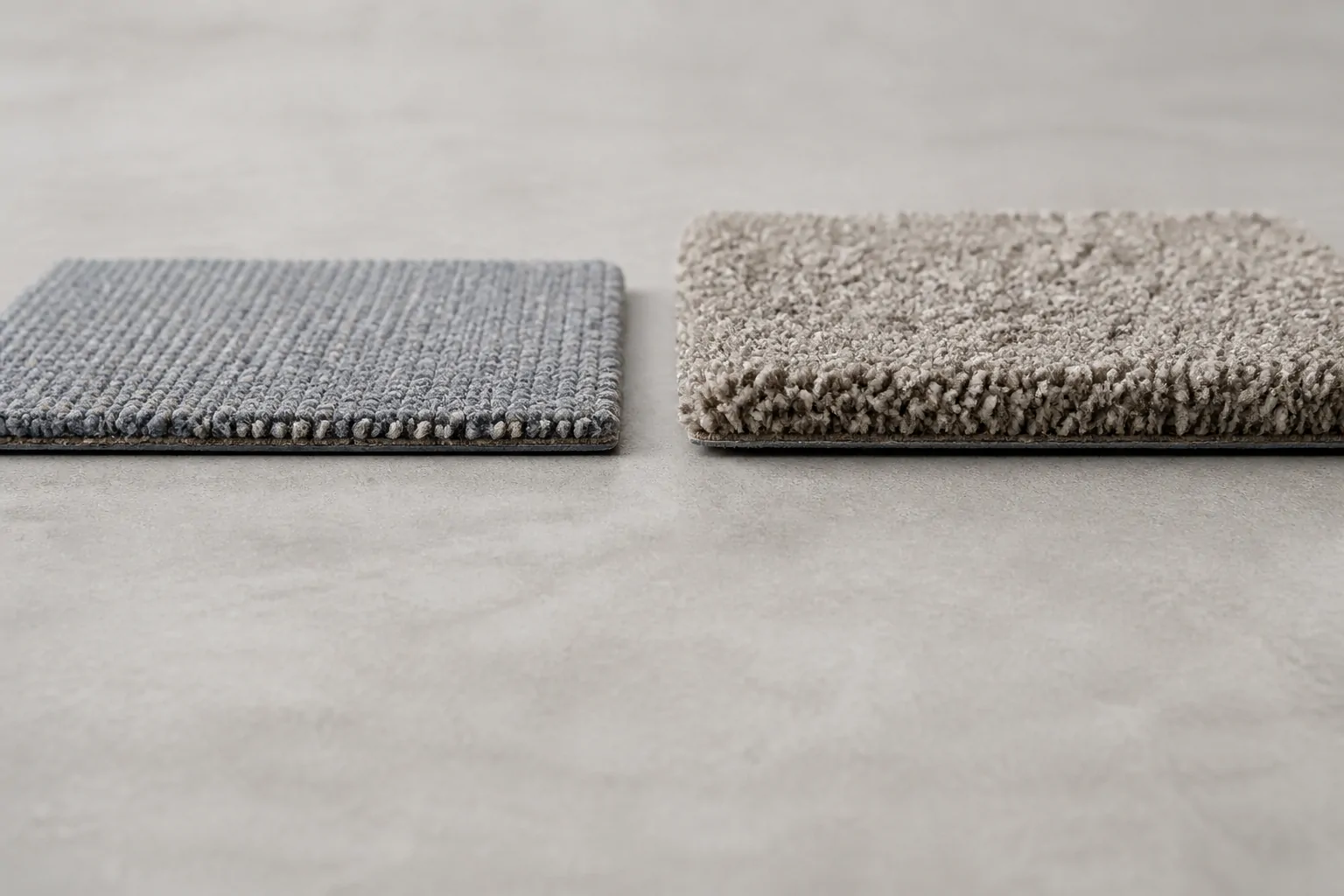
Carpet pile height is the height of the visible yarn surface. It is not the same as total carpet thickness, which may also include primary layers and backing. A low pile carpet usually has a flatter profile, while a higher pile can create more texture and a different underfoot feel.
When comparing carpet pile height, buyers should ask how it is measured and from which reference point. The answer can affect door clearance, floor transitions, rolling-chair movement, cleaning access, and how the finished floor looks beside hard surfaces.
Low pile carpet is often considered for busy commercial interiors because its profile can suit circulation and maintenance routines. That does not make it the right answer for every project. A hotel guest room, meeting space, office workstation, and entry corridor may each call for different construction choices.
What Is Carpet Face Weight?
Carpet face weight generally refers to the amount of surface yarn in a defined area. It is often used to help describe the surface material, but it does not describe the backing, the complete tile structure, or every aspect of construction.
Face weight should not be compared across unrelated products without context. Two carpets with different pile heights, fiber types, gauge, stitch rate, or constructions can have similar face weights and still look, feel, and perform differently. Ask the supplier what the listed figure includes and which unit is used.
What Is Carpet Density?
Carpet density describes how closely the surface fiber is packed within a construction. It has a relationship with pile height, face weight, yarn arrangement, and the overall structure. It can help buyers understand why two products with a similar visual thickness may not be built in the same way.
A high density carpet may be suitable for some applications, but higher density alone is not a universal quality ranking. Fiber resilience, backing, traffic, furniture movement, soil exposure, and the cleaning plan still matter. The most useful question is whether the complete product is suitable for the specific commercial area.
What Does Carpet Weight Mean?
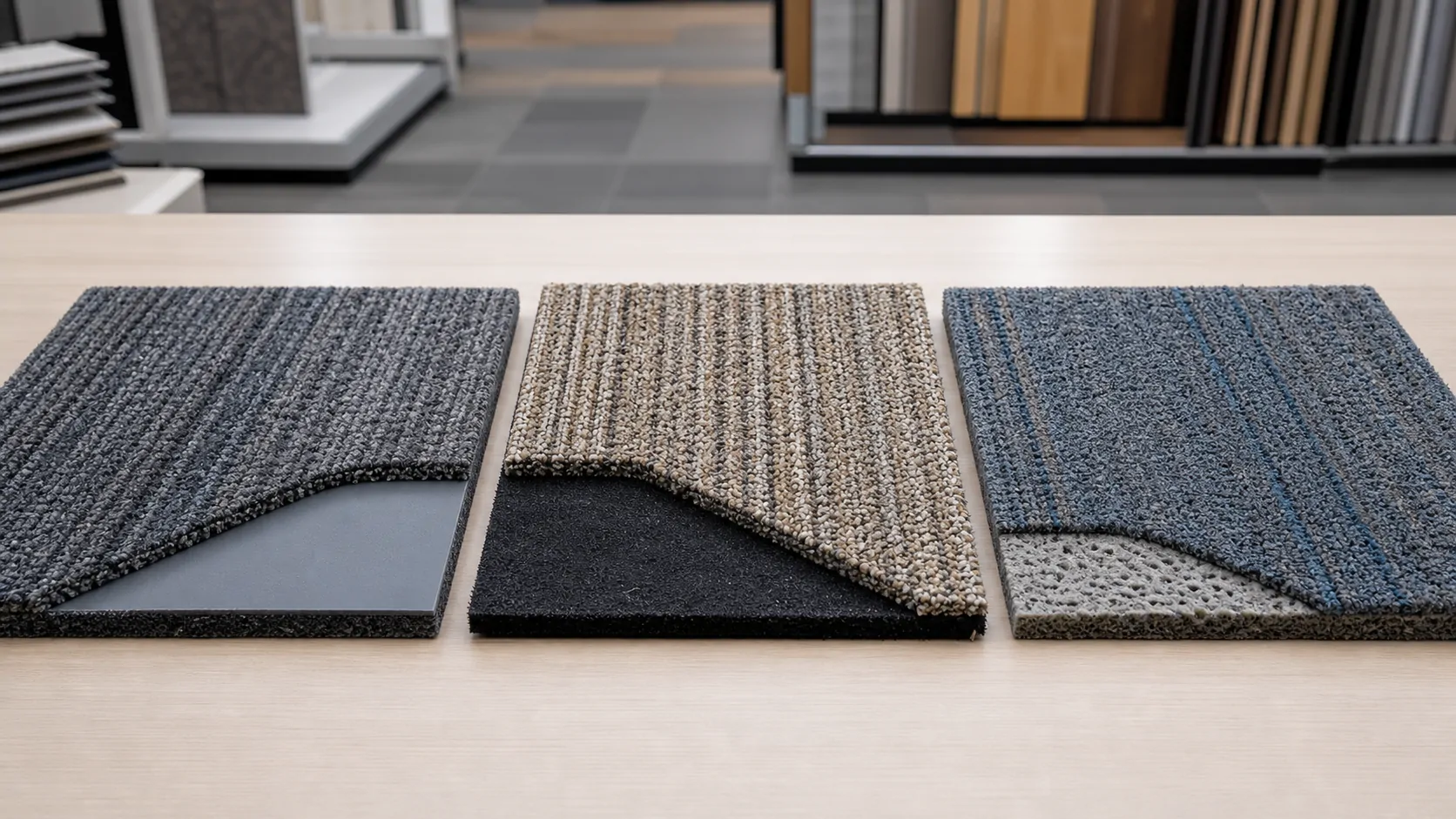
Carpet weight can refer to different measurements. Carpet face weight focuses on the surface yarn. Total carpet weight may also include backing and other layers. For carpet tiles, the backing and tile structure can materially affect the total figure.
Before comparing carpet weight between suppliers, confirm the definition, unit, area basis, and whether backing is included. A heavier product may reflect a different backing or construction rather than a simple improvement in surface performance. It should not be used alone to predict durability or value.
Carpet Pile Height vs Face Weight vs Density
The four fields below answer different questions. They should be read as a group, along with samples and the intended use of the space.
| Specification | What It Means | What It May Affect | What Buyers Should Check |
|---|---|---|---|
| Pile height | Height of the visible carpet pile | Profile, texture, transitions, cleaning | Measurement method, doors, adjoining floors, traffic |
| Face weight | Specified surface yarn weight in a stated area | Surface material and product comparison | Definition, unit, fiber, construction, area basis |
| Density | How closely surface fiber is arranged | Surface structure and appearance | Pile height, yarn arrangement, full construction |
| Total weight | Weight of the complete carpet system as defined | Handling, backing contribution, transport | Whether backing and other layers are included |
Does Higher Pile Mean Better Carpet?
No. Higher carpet pile height can change the feel and appearance of a floor, but it does not decide quality by itself. In commercial spaces, the appropriate pile depends on traffic, cleaning, furniture movement, rolling chairs, installation, maintenance, and the complete carpet construction.
For example, a low pile carpet may be considered for office circulation, reception, or other practical work areas. A different profile may be considered where comfort, texture, or design effect has a greater role. The specification should reflect the use of the area rather than a preference for one number.
Does Heavier Carpet Mean Better Quality?
Not necessarily. A heavier carpet may have a different backing, higher surface yarn weight, or a different tile structure. Each factor can be relevant, but none should be treated as a standalone quality verdict.
Compare fiber, construction, carpet density, backing, dyeing method, traffic requirements, and maintenance requirements. A useful product review also includes physical samples and a clear application brief. The Carpet and Rug Institute installation standards are a useful external reference for considering installation and subfloor planning.
How These Specifications Affect Commercial Applications
Office Buildings
Office buyers often consider low pile options, rolling chairs, cleaning, modular replacement, and traffic level. Workstations, corridors, meeting rooms, and reception areas may need different priorities. Review commercial carpet tiles when replacement planning is important.
Education Facilities
Education projects should consider corridor traffic, classroom use, cleaning frequency, color zoning, and future replacement. Carpet pile height should be assessed with density, construction, and the expected daily use of each zone.
Hotels and Conference Centers
Hotels may compare appearance, comfort, corridor traffic, guest rooms, meeting areas, and acoustic expectations. The same product is not always required throughout the property. A zone-based specification can be more useful than a single blanket choice.
Healthcare Facilities
Healthcare buyers should confirm cleaning needs, wheeled traffic, facility requirements, and available product documents. A standard commercial carpet should not be presented as automatically meeting healthcare requirements without project-specific evidence.
Retail, Banks, and Public Buildings
Heavy circulation, appearance retention, maintenance, entrance dirt, and replacement planning are usually important. In these areas, product selection should consider the complete construction and a realistic cleaning plan rather than only total carpet weight.
How to Compare Commercial Carpet Specifications
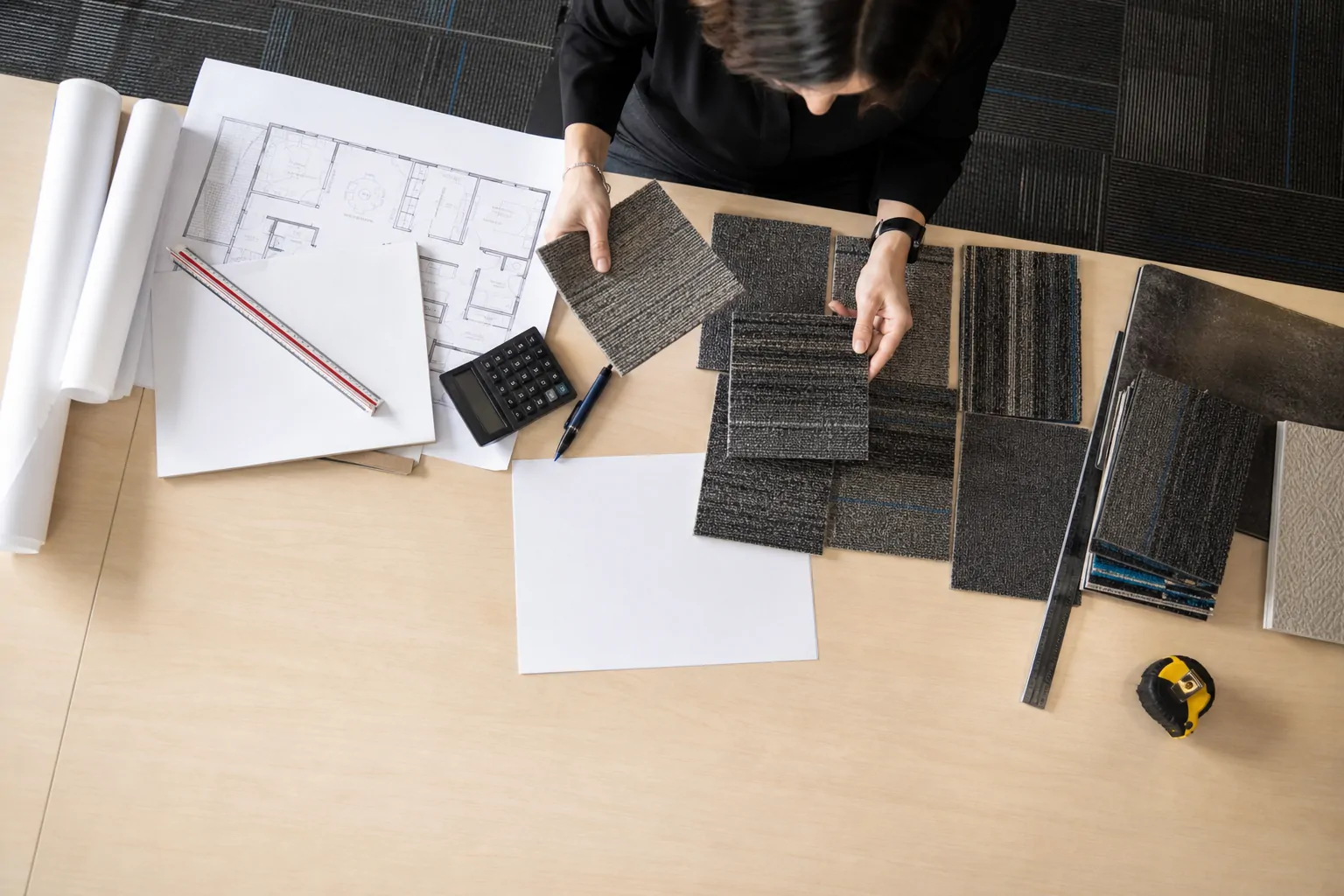
Compare fiber, construction, carpet pile height, carpet face weight, carpet density, total weight, backing, tile or roll size, dyeing method, installation, and available test reports. Use the same units and definitions before treating two values as comparable.
Do not compare one number while ignoring the rest of the sheet. Melozon’s guide on how to read a commercial carpet specification sheet can help buyers organize a complete review. Backing should also be considered through the guide to carpet tile backing types.
Questions to Ask a Commercial Carpet Supplier
- What is the carpet pile height, and how is it measured?
- What does the listed carpet face weight include?
- What is the total carpet weight, and does it include backing?
- How is carpet density defined for this construction?
- What fiber, construction, and dyeing method are used?
- What backing is used?
- Which commercial applications is the product designed for?
- Are physical samples and relevant test reports available?
How Melozon Supports Commercial Carpet Buyers
Melozon can help buyers explain carpet specifications, compare commercial carpet options, provide standard or custom samples, discuss pile height and construction, confirm backing and fiber options, and prepare commercial quotations for bulk orders and export support.
Buyers can review the commercial carpet product range and the nylon vs polypropylene commercial carpet guide before preparing a project brief.
Frequently Asked Questions
What is carpet pile height?
Carpet pile height is the height of the visible surface yarn. It should be reviewed with construction, density, backing, transitions, and maintenance needs.
What is a good pile height for commercial carpet?
There is no single best value. The appropriate pile height depends on traffic, cleaning, comfort, construction, and the application area.
What is carpet face weight?
Carpet face weight generally describes surface yarn weight within a defined area. It does not automatically include backing or describe the complete product.
What is carpet density?
Carpet density describes how closely the surface fiber is packed. It should be considered alongside pile height, face weight, fiber, and construction.
Is higher carpet density better?
Not in every case. A higher number does not replace a complete review of the product, project traffic, backing, and maintenance plan.
Does heavier carpet mean better quality?
No. Total carpet weight can reflect backing and construction as well as surface material. Compare the full specification and physical sample.
Is low pile carpet suitable for offices?
It may be suitable for office applications where traffic, rolling chairs, cleaning, and transitions support that choice. Confirm the full construction and project requirements.
What is the difference between face weight and total carpet weight?
Face weight focuses on surface yarn. Total carpet weight may include backing and other construction layers, depending on the supplier’s definition.
Compare Commercial Carpet Specifications for Your Project
Send Melozon your project type, application area, expected traffic level, estimated quantity, preferred specifications, and destination to request commercial carpet samples and a quote.