A Complete Guide to Carpet Tile Backing Types
Carpet tile backing is a major part of how a tile performs in a commercial interior. Different carpet tile backing types can affect stability, underfoot feel, handling, installation planning, maintenance, and shipping. For buyers of commercial carpet tiles, the backing should be reviewed with the pile, construction, subfloor, traffic pattern, and project delivery plan.
PVC, bitumen, and cushion backing are commonly discussed options, but no backing is the correct answer for every project. The practical choice depends on the product structure, thickness, installation method, application area, and the conditions at the site. This guide explains what B2B buyers should compare before requesting samples or a quotation.
What Is Carpet Tile Backing?
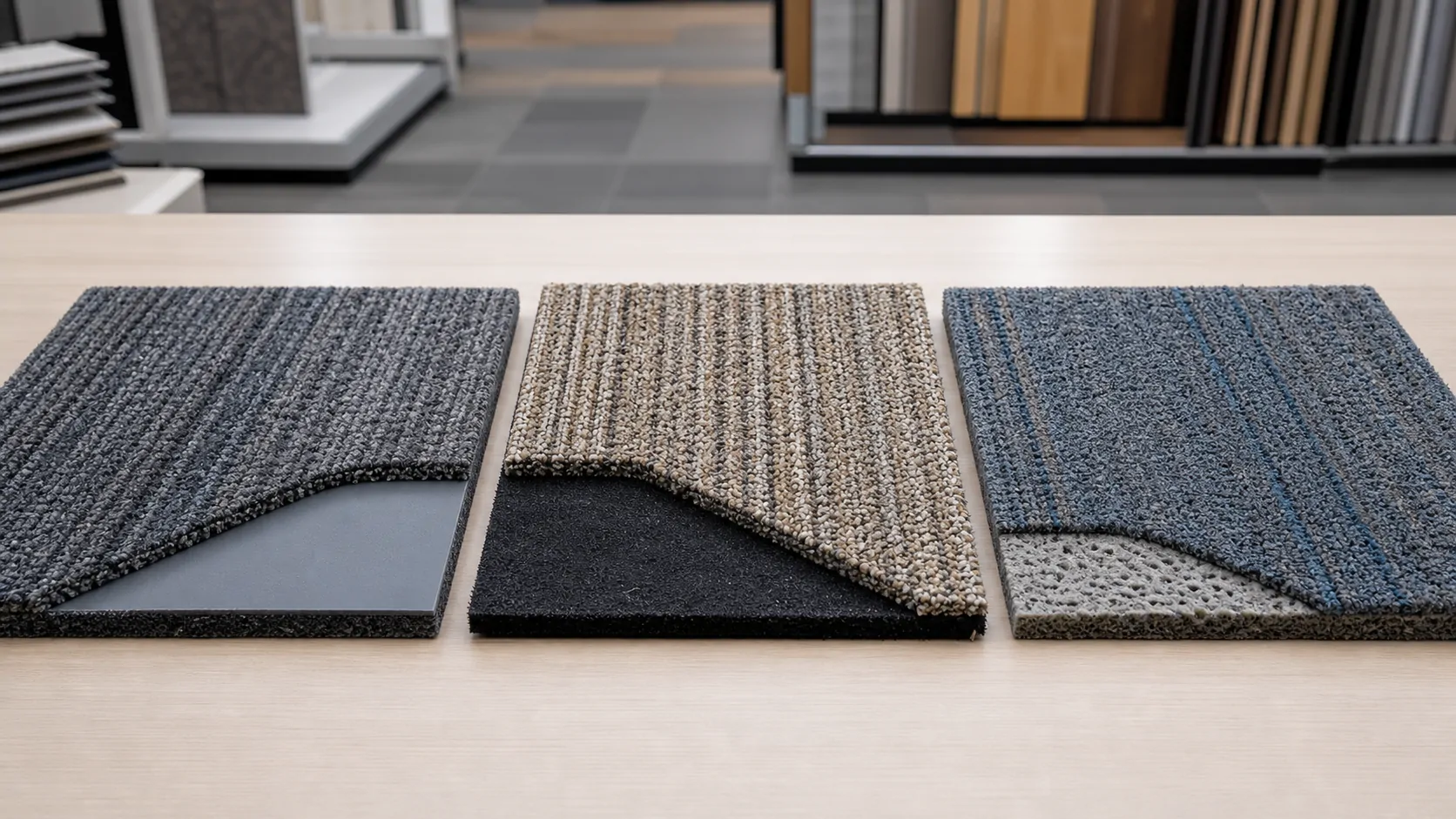
Backing is the layer or group of layers attached to the underside of a carpet tile. It supports the carpet structure, helps the tile retain its intended dimensions, and contributes to how the product is handled and installed. It can also influence the feel underfoot, the way a tile sits on the floor, and the practical steps required for replacement or future maintenance.
A product name alone does not describe the whole backing system. Buyers should request the relevant product specification and sample, then discuss the backing together with tile size, total thickness, weight, pile construction, installation recommendation, and intended application.
Main Carpet Tile Backing Types
PVC Backed Carpet Tiles
PVC backed carpet tiles use a PVC-based backing construction. They are often considered for general commercial interiors, including offices and retail spaces, where buyers need a modular product and a clear installation approach. The actual feel, stability, and handling characteristics depend on the full product build rather than the backing name alone.
When comparing PVC backed carpet tiles, ask about total tile thickness, weight, subfloor compatibility, recommended adhesive system, carton quantity, and the sample reference that will control production. These details are more useful than assuming that every PVC-backed tile behaves the same way.
Bitumen Carpet Tile Backing
Bitumen carpet tile backing uses a bitumen-based layer within the tile construction. Buyers often compare it when they need a firm commercial backing and want to understand product weight, dimensional stability, handling, shipping, and installation requirements. It can be considered for offices and public commercial areas when the project specification supports it.
For export orders, bitumen backing should be reviewed alongside carton weight, pallet planning, container loading, and on-site handling. The quotation should state the product unit, packing method, and any project-specific labeling requirements instead of leaving logistics assumptions unstated.
Cushion Backed Carpet Tiles
Cushion backed carpet tiles include a resilient cushioning layer as part of the backing system. They may be considered by projects that place value on underfoot comfort, acoustic comfort, employee experience, meeting rooms, executive areas, hospitality spaces, or premium commercial zones.
The buyer should confirm the complete thickness, floor transitions, door clearances, installation method, and interface with adjacent flooring. A cushion-backed option can affect more than comfort, so it should be reviewed with the site details before the order is confirmed.
Carpet Tile Backing Comparison
Use a product-specific sample and specification for final selection. This table provides a starting framework for comparing the common backing categories:
| Comparison | PVC Backing | Bitumen Backing | Cushion Backing |
|---|---|---|---|
| Structure | PVC-based backing construction. | Bitumen-based layer within the tile build. | Backing system with a resilient cushioning layer. |
| Weight | Confirm the product specification and carton weight. | Confirm tile, carton, and pallet weight for the order. | Confirm total tile weight and packing details. |
| Dimensional stability | Review with the full tile construction and installation plan. | Review with the product build, site, and installation method. | Review with thickness, construction, and site conditions. |
| Underfoot comfort | Depends on the complete product structure. | Depends on the complete product structure. | May be considered where additional comfort is a priority. |
| Acoustic comfort | Confirm product-specific information where required. | Confirm product-specific information where required. | May be considered for areas with acoustic priorities. |
| Installation | Confirm substrate and adhesive compatibility. | Confirm substrate, adhesive, and handling requirements. | Confirm thickness, transitions, and installation guidance. |
| Local replacement | Plan compatible spare material and layout direction. | Plan compatible spare material and layout direction. | Plan compatible spare material and installation conditions. |
| Transportation | Review carton, pallet, and container plan. | Review product weight and handling plan carefully. | Review thickness, packing volume, and handling plan. |
| Typical applications | General commercial, office, or retail applications. | Commercial offices and public areas where the product specification fits. | Offices, meeting rooms, executive areas, hospitality, or premium commercial areas. |
| Before ordering | Confirm sample, specification, quantity, and installation method. | Confirm sample, weight, packing, specification, and installation method. | Confirm sample, thickness, transitions, specification, and installation method. |
PVC vs Bitumen Carpet Tile Backing
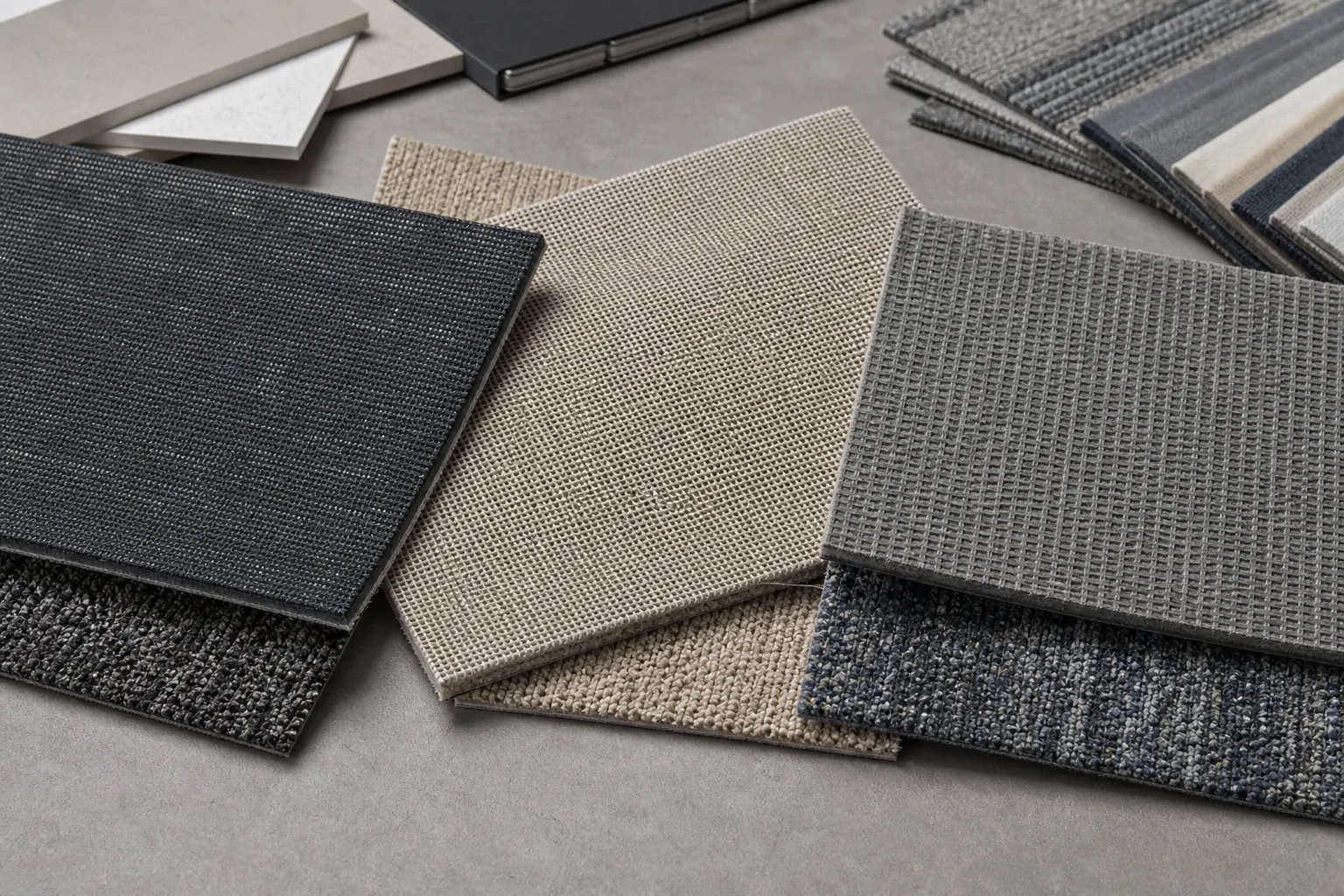
PVC and bitumen backing are often compared because both can be used in commercial carpet tiles, yet their material composition and product weight can differ. Buyers should compare the actual sample and specification rather than making a selection from a backing label alone. Product thickness, tile dimensions, pile construction, and installation conditions can all influence the practical result.
For a B2B order, include handling and shipping in the comparison. Carton quantity, gross weight, pallet plan, container loading, receiving equipment, and storage conditions can affect total project cost. A commercial carpet tiles inquiry should make these assumptions visible before the quote is approved.
Cushion Backed Carpet Tiles
Cushion backing may be suitable for projects that are considering comfort and acoustic priorities alongside modular replacement planning. It can be relevant to offices that host long working days, meeting rooms, executive spaces, hospitality interiors, and commercial areas where the floor experience is part of the design brief.
It is important to confirm thickness, door clearances, floor transitions, and installation requirements. A product with a cushioning layer should be evaluated in the full room context, especially where it meets other floor finishes or access panels.
How Backing Affects Installation
Backing choice affects the questions an installer and buyer need to answer. Confirm subfloor condition, moisture control, adhesive compatibility, tile direction, floor transitions, raised-floor access, replacement planning, and installer experience. In Southeast Asia, site humidity, subfloor status, air-conditioning conditions, and the construction sequence should be discussed before shipment, not after material arrives.
The supplier can provide product-specific guidance, but the installer and project team remain essential to confirming actual site readiness. Clear drawings, photos, and a defined installation method reduce uncertainty in both tile quantity and work planning.
How Backing Affects Shipping and Handling
Backing can affect product weight, carton quantity, pallet planning, container loading, handling on site, storage conditions, and protection before installation. These details matter to distributors and contractors because packaging choices can influence receiving, movement between floors, and how the material is staged before work begins.
Ask the carpet tile manufacturer to state the selling unit, carton dimensions, gross weight, pallet approach, and project label requirements. This makes the comparison more useful than a product-only price and helps the buyer plan export and local handling.
Which Carpet Tile Backing Is Best for Your Project?
PVC backing may be suitable for general commercial projects, offices, retail spaces, and projects that need modular replacement planning. Bitumen backing may be suitable for commercial projects seeking a firm backing while considering transportation and project cost. Cushion backing may be suitable for offices, meeting rooms, executive spaces, or areas that prioritise additional comfort and acoustic performance.
These are comparison prompts, not absolute product claims. The best choice should be confirmed from a sample, technical information, intended application, installation conditions, order quantity, packing plan, and project budget. Review the wider commercial carpet product range when comparing product formats and specifications.
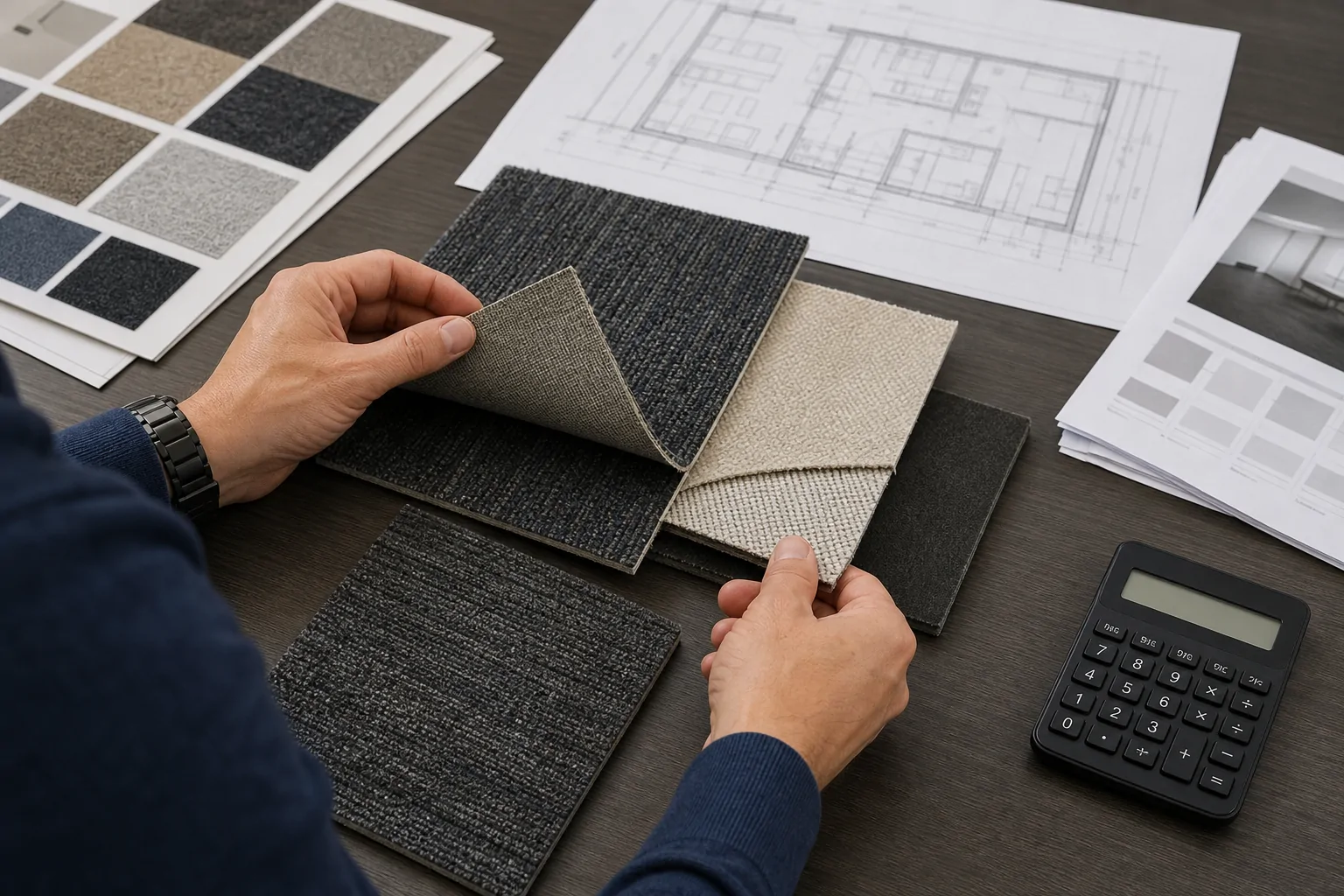
Questions to Ask a Carpet Tile Supplier
- What backing material and full tile construction are used?
- What are the total tile thickness and product weight?
- Is the backing suitable for the stated subfloor and application?
- Which installation method and adhesive system are recommended?
- Are physical samples and product documents available?
- What MOQ and production lead time apply to this product, colour, and order structure?
- How is the product packed for export, including cartons, pallets, and labels?
How Melozon Supports Commercial Carpet Tile Buyers
Melozon supports buyers by comparing backing options, selecting commercial carpet tiles, communicating product specifications, arranging standard and custom samples, discussing OEM colours and backing requirements, preparing bulk quotations, and coordinating export packing and shipping. Explore Melozon’s commercial carpet solutions to prepare the right information for an inquiry.
Frequently Asked Questions
What is the best backing for carpet tiles?
There is no universal best backing. Choose according to the product specification, project use, subfloor, installation method, comfort needs, logistics, and sample approval.
What is PVC carpet tile backing?
It is a PVC-based backing construction used in some commercial carpet tiles. Confirm the complete product build, thickness, weight, and installation guidance for the quoted item.
What is bitumen carpet tile backing?
It is a bitumen-based layer within a carpet tile construction. Buyers should review it with product weight, packing, handling, installation, and intended application.
What are cushion backed carpet tiles?
They use a backing system with a cushioning layer. They may be considered where underfoot comfort or acoustic priorities are important.
Is PVC backing better than bitumen backing?
Neither is always better. Compare product-specific structure, installation conditions, weight, handling, design needs, and project requirements.
Which carpet tile backing is suitable for offices?
PVC, bitumen, or cushion backing can be considered depending on the office layout, comfort needs, traffic, subfloor, installation plan, and approved product specification.
Does carpet tile backing affect installation?
Yes. Backing can affect the questions around subfloor readiness, adhesive compatibility, thickness, transitions, handling, tile direction, and replacement planning.
Can I request samples with different backing types?
Yes. Request samples that show the relevant pile, backing, thickness, colour, and construction needed for your project evaluation.
Compare Carpet Tile Backing Options for Your Project
Send Melozon your project type, application area, estimated quantity, preferred backing, destination, and required delivery date to request carpet tile samples and a quotation. A complete brief helps compare the right product structure, packing approach, and commercial quotation for the project.