
How to Choose a Commercial Carpet Supplier for Southeast Asia Projects
Selecting a commercial carpet supplier Southeast Asia buyers can rely on is not only about color, price, or delivery time. For hotels, offices, schools, healthcare spaces, and mixed-use developments, the carpet must match the project design, traffic level, installation method, and site conditions. A product that looks suitable in a sample room can still create problems if the subfloor, layout direction, adhesive method, or edge cutting is not planned correctly.
This guide explains how to compare commercial carpet options, what installation details affect purchasing decisions, and what information to prepare before asking Melozon for samples or a project quotation.
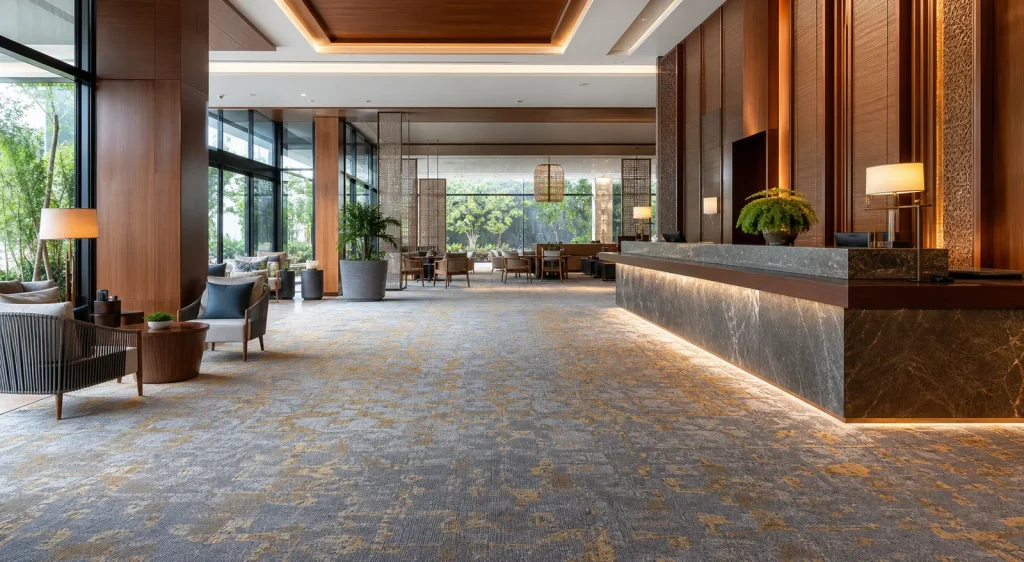
Why Installation Planning Matters When Choosing a Commercial Carpet Supplier Southeast Asia Buyers Can Trust
Commercial carpet is a project material, not a simple decorative finish. The final result depends on product construction, subfloor preparation, installation sequence, cutting accuracy, and protection after installation.
The installation guide reviewed for this article highlights several practical points that buyers often overlook. The floor surface should be flat, clean, smooth, and strong enough for installation. Moisture control is also important, especially for cement floors, ground floors, and basement areas. If the site is not prepared, even a suitable carpet product may show uneven seams, poor adhesion, or premature movement.
For humid markets in Southeast Asia, this is especially relevant. Procurement teams should not separate product selection from site conditions. A reliable supplier should help buyers discuss carpet type, backing, layout, adhesive or non-adhesive installation options, and project schedule before bulk production begins.
Main Commercial Carpet Types for Project Buyers
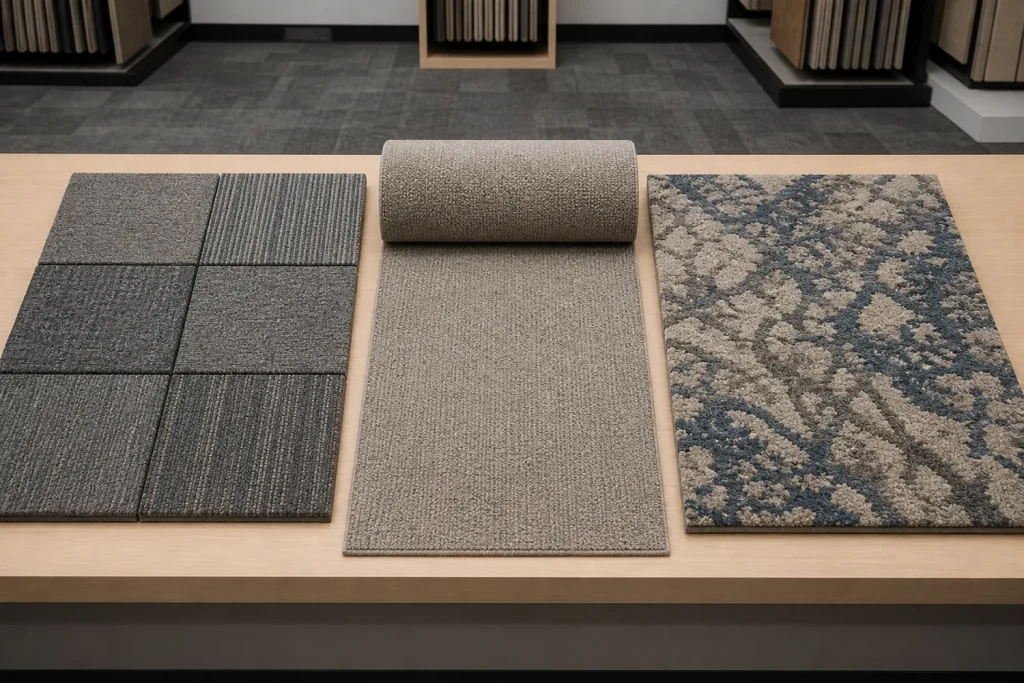
Different commercial carpet formats serve different project needs. The right choice depends on the room type, maintenance plan, design goal, and installation conditions.
| Product type | Best fit | Procurement value | Installation note |
|---|---|---|---|
| Carpet tiles | Offices, corridors, schools, modular commercial spaces | Easy replacement of damaged sections and flexible layout planning | Requires accurate centerline layout and consistent tile direction |
| Broadloom carpet | Hotel rooms, banquet areas, hospitality interiors | Continuous surface with fewer visible modular joints | Requires careful measuring, cutting, seaming, and edge finishing |
| Wall-to-wall carpet | Guest rooms, corridors, large interior areas | Creates a complete finished floor surface | Site dimensions and perimeter details should be confirmed early |
| Custom carpet | Hotels, clubs, branded spaces, design-led projects | Supports custom color, pattern, size, and visual identity | Artwork, sampling, and production approval should be planned before order confirmation |
| Custom logo carpet | Entrances, reception areas, branded zones | Helps define a project or brand area | Logo size, color, placement, and cleaning exposure should be reviewed |
When Carpet Tiles Make Sense
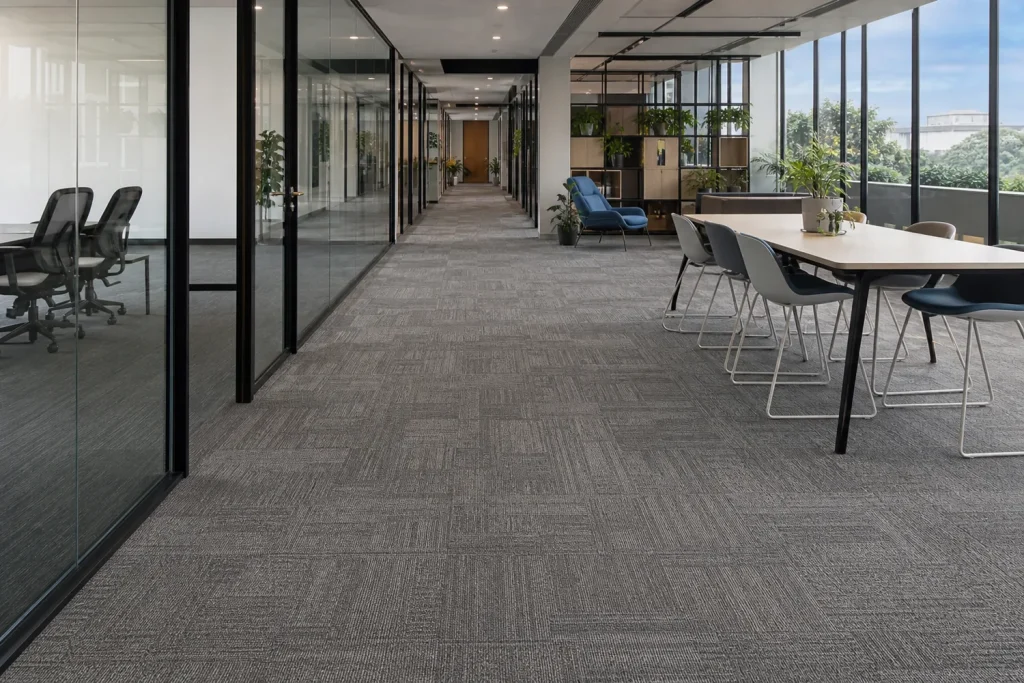
Carpet tiles are often preferred for offices, education spaces, public corridors, and projects that need easier maintenance. If one area is stained or damaged, individual tiles can usually be replaced more easily than a full broadloom section.
When Broadloom or Wall-to-Wall Carpet Is Better
Broadloom and wall-to-wall carpet are suitable when the project needs a more continuous surface. Hotels often use these formats in guest rooms, corridors, and hospitality areas where comfort and a refined visual effect are important.
Buyers should confirm roll dimensions, room measurements, cutting allowance, seam placement, and edge treatment. These details affect waste, installation time, and the final appearance of the carpet.
When Custom Carpet Adds Value
Custom carpet is useful when standard products cannot meet the design brief. Hotel corridors, branded reception areas, clubs, and premium commercial interiors may require specific patterns, colors, or logo treatments.
For custom projects, the sample approval process matters. Buyers should prepare pattern references, color direction, room dimensions, estimated quantity, and target delivery schedule before requesting a quotation.
Project Conditions to Check Before Requesting a Quote
Many carpet problems begin before installation. A well-prepared buyer can reduce delays by checking the site and specification requirements early.
The installation guide gives clear reminders about floor preparation. The base floor should be moisture-controlled, level, clean, and free from loose materials. Cement floors should have adequate strength. The guide also notes a moisture content limit and a flatness tolerance, but those values come from the source document and should be checked against local standards, project specifications, and site testing before being used contractually.
Subfloor and Site Readiness
Ask the contractor to confirm whether the floor is cement, wood, raised floor, self-leveling floor, or another substrate. Each condition may affect adhesive choice, installation sequence, and protection needs.
Before carpet arrives, the site should be clean and ready for layout. Dust, construction debris, uneven spots, and moisture can all affect the final result.
Skirting, Edge Details, and Room Perimeter
Skirting boards or perimeter details should be prepared before carpet installation, with enough space left for the carpet thickness where needed. For procurement teams, this means carpet thickness, backing, and edge transition details should be shared with the contractor early.
If carpet edges are compressed against walls or adjacent tiles, the finished floor may not sit cleanly. Accurate measuring and cutting around walls and corners are important for both carpet tiles and wall-to-wall installations.
Adhesive and Non-Adhesive Options
The source guide describes a full-spread adhesive process and a separate sticker-based method for carpet tiles. The general procurement lesson is simple: installation method should match the backing, substrate, maintenance plan, and project requirements.
For projects using raised floors or areas that may need access under the carpet, buyers should ask whether a removable or lower-impact installation approach is suitable. For fixed installations, adhesive compatibility and drying conditions should be confirmed by the installer.
Installation Steps Buyers Should Understand
Procurement managers do not need to install the carpet themselves. However, they should understand the main installation sequence so they can ask better questions and avoid unclear scope.
| Installation stage | What it means for buyers |
|---|---|
| Site preparation | Confirm moisture, flatness, cleanliness, and substrate type before delivery |
| Tool preparation | Installers need measuring, marking, cutting, and pressing tools |
| Cleaning | Dust and debris should be removed before layout and fixing |
| Center point and chalk lines | Layout should begin from a planned reference point, not from a random wall |
| Adhesive or fixing method | Method should suit backing, substrate, and future maintenance needs |
| Directional laying | Tile direction or pattern direction should follow the drawing or agreed layout |
| Cutting | Wall edges and corners require accurate measuring and clean trimming |
| Pressing and seam control | Edges and seams should be pressed and aligned to reduce visible gaps |
| Final cleaning | Waste material and dust should be removed after installation |
| Protection film | Finished carpet may need protection if other trades continue work |
This sequence affects procurement because it influences lead time, spare quantity, installer instructions, and site coordination. If the project involves multiple contractors, the carpet should not be exposed to unnecessary damage after installation.
Application Areas in Commercial Projects
Commercial carpet is used in many project types, but each area has different priorities.
Hotels often focus on design, comfort, corridor appearance, and guest experience. Offices usually require practical maintenance, acoustic comfort, and modular replacement. Schools and training facilities need durable surfaces that are easy to maintain. Healthcare and public spaces may require clear specification discussions around cleaning, safety, and facility policy.
Across Southeast Asia, buyers also need to consider climate, building operation, import coordination, and contractor availability. A carpet that is easy to specify, ship, install, and maintain can reduce project risk.
Buyer Checklist Before Asking for Samples or a Project Quote
Use this checklist before contacting a supplier. It helps the supplier recommend the right product and helps your team compare quotations more fairly.
- Application area: hotel lobby, guest room, corridor, office, school, healthcare space, or retail area.
- Expected traffic level: light, medium, or heavy commercial use.
- Product format: carpet tiles, broadloom carpet, wall-to-wall carpet, custom carpet, or logo carpet.
- Carpet construction: preferred texture, pile style, backing, and surface appearance.
- Fiber or yarn requirements: any project specification, cleaning expectation, or performance preference.
- Size and quantity: room dimensions, total area, waste allowance, and spare stock requirement.
- Color and design: standard color, custom pattern, logo artwork, or designer reference.
- Installation method: adhesive, tile sticker, loose lay option, or contractor-specified method.
- Subfloor condition: cement, raised floor, wood, self-leveling floor, or other base.
- Performance requirements: durability, cleaning policy, acoustic comfort, and facility standards.
- Sample requirements: physical samples, color approval, custom strike-off, or project mockup.
- Certification requirements: only list certifications required by the project and ask the supplier to confirm available documents.
- Delivery schedule: target installation date, shipping destination, and project phasing.
- Technical documents: product specification, installation guidance, packing details, and maintenance instructions.
How to Evaluate a Commercial Carpet Supplier
A supplier should do more than send a price list. For B2B buyers, the right supplier can help reduce project uncertainty.
Look for clear product categories, sample support, customization capability, bulk production coordination, and export packing experience. For custom projects, the supplier should be able to discuss color, pattern, size, sample approval, and production requirements in a structured way.
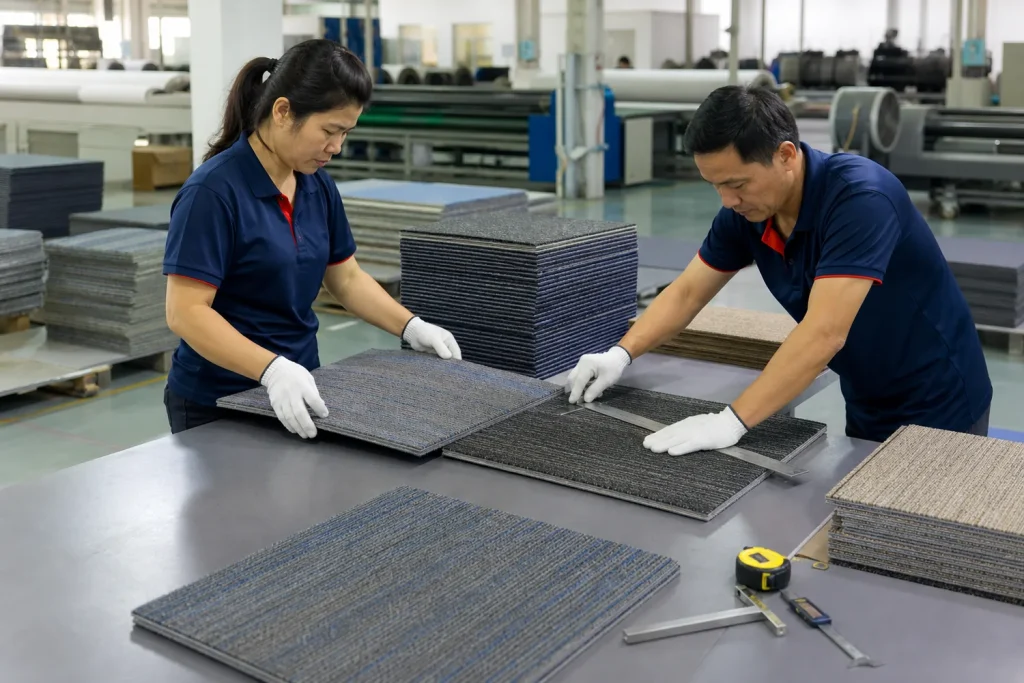
Quality control should also be part of the conversation. Buyers can ask how the supplier checks size, appearance, color consistency, backing condition, packing, and order consistency before shipment.
Why Work With Melozon
Melozon supports B2B commercial carpet manufacturing, customization, wholesale supply, and export coordination for project buyers. Its product scope includes carpet tiles, broadloom carpet, wall-to-wall carpet, custom carpet, hotel carpet, office carpet, commercial project carpet, and custom logo carpet.
For buyers comparing suppliers, Melozon can support OEM and ODM requirements, custom patterns, colors, sizes, samples, bulk production, project quotations, product specification support, export packing, and shipping coordination. This makes Melozon suitable for importers, distributors, contractors, designers, and project procurement teams that need both product supply and practical project communication.
FAQ
What is the best carpet type for office projects?
Carpet tiles are often practical for office projects because they support modular layouts and easier replacement planning. Buyers should still confirm traffic level, backing, tile direction, subfloor condition, and spare quantity before ordering. For executive offices or design-led areas, broadloom or custom carpet may also be suitable.
Can Melozon provide custom carpet patterns and colors?
Yes. Based on the project information provided, Melozon supports custom patterns, colors, sizes, OEM and ODM requirements, and custom carpet production. Buyers should prepare design references, target colors, dimensions, estimated quantity, and sample approval requirements so the quotation can be more accurate.
Should I request samples before placing a bulk order?
For most commercial projects, samples are strongly recommended. Samples help buyers review color, texture, backing, thickness, and design suitability under real project lighting. For custom carpet, sample approval is especially important before bulk production begins.
What information is needed for a project quotation?
Prepare the product type, application area, total quantity, room dimensions, preferred color or pattern, backing or specification needs, installation method, destination, delivery schedule, and sample requirements. If the project has certification or document requirements, include them in the quotation request.
Does installation method affect carpet selection?
Yes. The installation guide shows that subfloor preparation, centerline layout, adhesive or sticker fixing, tile direction, cutting, seam pressing, cleaning, and protection all affect the finished result. Buyers should discuss installation conditions before confirming the carpet format and backing.
Can commercial carpet be supplied for hotels?
Yes. Melozon supplies hotel carpet, broadloom carpet, wall-to-wall carpet, and custom carpet for commercial projects. Hotel buyers should confirm the application area, design intent, room dimensions, pattern direction, sample approval process, delivery schedule, and installation requirements.
Can Melozon support export orders for Southeast Asian buyers?
Melozon supports export packing and shipping coordination according to the project information provided. Buyers should share destination, order quantity, packing requirements, delivery timeline, and any import documentation needs so the supplier can coordinate the order more efficiently.
Does Melozon provide installation support?
Melozon can provide product specification support, and installation planning should be discussed during the quotation stage. The final installation work should be handled by qualified local contractors who can verify site conditions, subfloor readiness, adhesive method, cutting, seam control, and finished-floor protection.
Select Carpet With the Project Site in Mind
Choosing a commercial carpet supplier Southeast Asia project teams can work with requires more than comparing sample colors. Buyers should review product type, subfloor readiness, installation method, layout direction, cutting details, cleaning needs, and protection after installation.
If you are preparing a hotel, office, education, healthcare, or commercial development project, contact Melozon to discuss your product requirements, request samples, or prepare a project quotation.